

This energy drink company came seemingly out of nowhere in 2020 to catch the world by surprise. Massive sales growth has allowed the company to gain a cult following with a plethora of fitness enthusiasts and everyday people alike.
Meanwhile, large commercial success enabled the stock of Celsius to become a darling of capital markets.
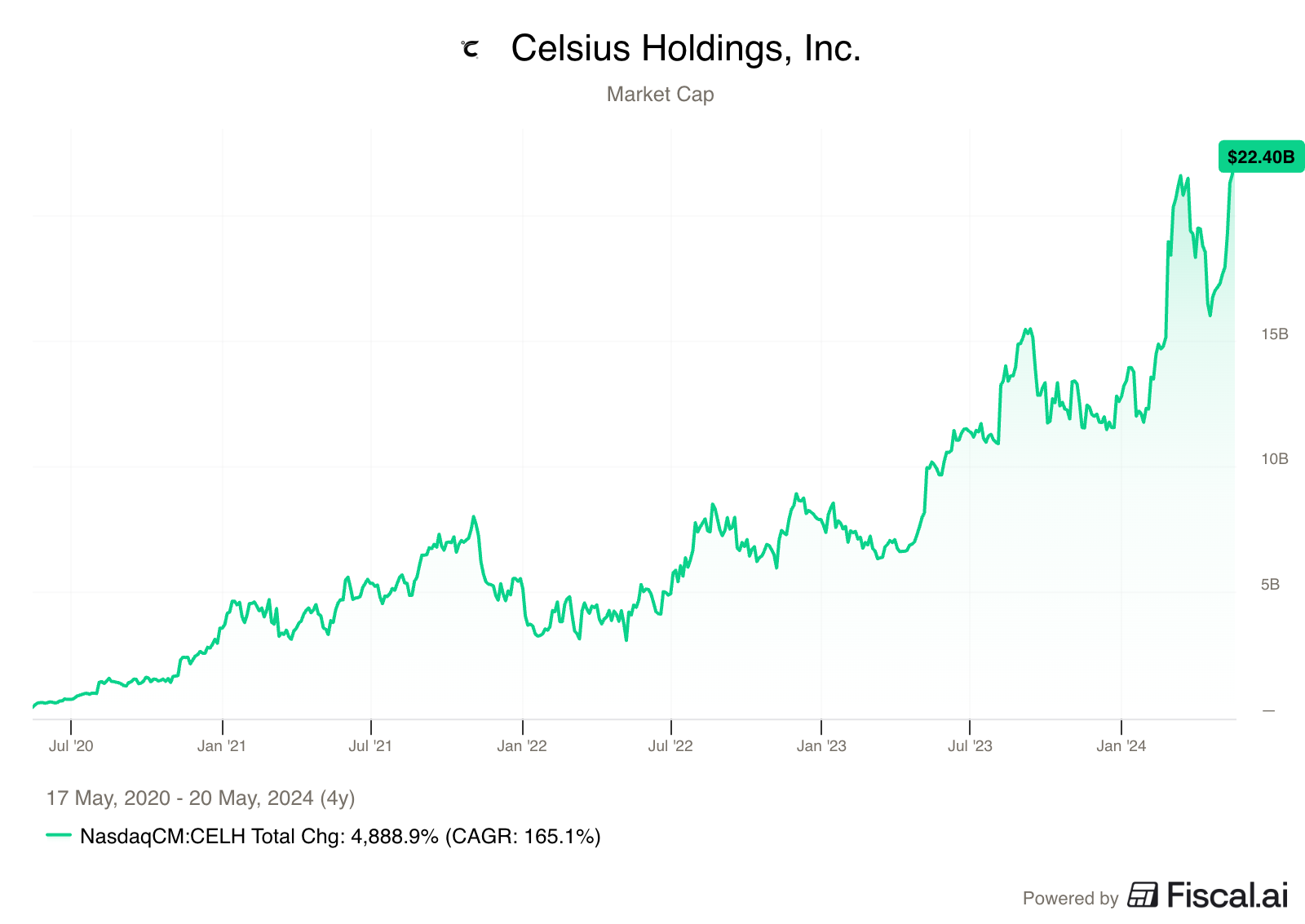
At the May 2024 peak, Celsius had a market cap of $22.4B, with the stock rising 4,890% in just 4 years.
However, as of July 2026, the stock is down 67% from the peak.
In 2022, Celsius signed a game-changing distribution agreement with Pepsi that enabled it to massively increase its sales and profits. The market rewarded the company handsomely for this growth.
However, this growth stopped fast and suddenly, as Celsius and Pepsi realized that they might have overestimated the demand.
Many analysts and investors saw this as a classic story of the once fast-growing trend stock collapsing, however, the company had different plans.
It acquired two completely different energy drink brands, Alani Nu and Rockstar, and is positioning itself to become an energy beverage portfolio company with over 20% market share in the US.
In this Deep Dive, I will explain Celsius business model, its acquisition of Alani Nu and Rockstar, its distribution strategy with Pepsi, and the company’s finances.
Most importantly, I will conclude with a valuation model to see whether returns to the previous share levels are possible.
Let’s begin.
1. The Story of Celsius
2. Marketing Strategy
3. Distribution
4. Risks
5. Opportunities
6. Finances
7. Valuation
8. Valuation Model
9. Conclusion
1. The Story of Celsius
Celsius is an energy beverage company based in Florida, USA. While the company is around 20 years old, the bulk of its success has come in the last 5 years.
The energy drink industry is very competitive, with many brands fighting for customers.
There is a massive demand for caffeinated, uplifting, and refreshing drinks, while at the same time, people and governments are getting more concerned about the negative health effects of addictive, highly caloric sugary beverages. Energy drinks, being the primary culprit, have a reputation for not being the healthiest option. Celsius saw a gap in the market and tackled it head-on.
Celsius has chosen a specific sub-niche, the “healthier” fitness energy drink market!
This was a great market entry strategy.
In the fast-moving consumer goods (FMCG) business, marketing determines one’s success.
If we are being honest, a lot of the FMCG brands sell the same stuff, just packaged and marketed differently. Customers choose one product over another because of the product’s message.
Celsius is hip, “healthy”, and functional, while other energy drinks are “unhealthy sugar bombs”!
1.1. Products
One of the company’s main products is its flagship 12oz Celsius energy drink can.
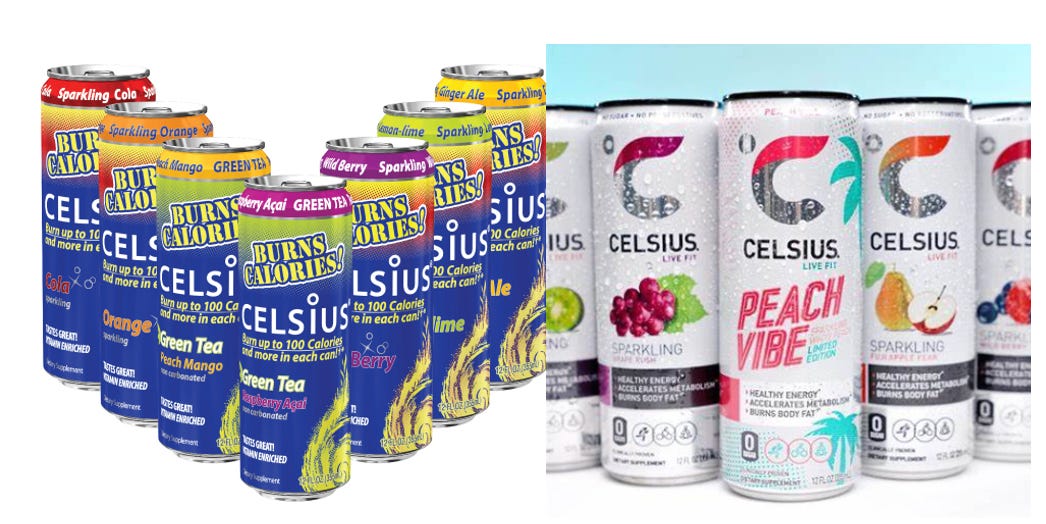
Through the years, as the company tried to become more mainstream, it completely redesigned the packaging. In 2008, Celsius drinks were primarily sold in niche stores to fitness enthusiasts. As you can see from the left picture, the design was quite cluttered, emphasizing its calorie-burn-enhancing qualities. Such design and messaging would appeal only to a certain subset of the fitness community. It’s night and day compared to how the cans look today.
Understanding the importance of packaging in FMCG was one of the main drivers behind Celsius success!
People shop with their eyes. The redesigned can is not a cluttered, ugly mess, rather, it’s clean, bright, and inviting. Instead of telling its customers what their drink does, Celsius invites you to “feel” what it does.
A clean white can, with bright pictures of fruits, small text with claimed health benefits, and 3 little icons of a person running, cycling, and meditating.
There are over 20 flavors on offer, with names such as Cosmic Vibe, a strawberry, lemon, orange, mandarin, and blueberry-flavored drink.
Oasis Vibe, pear cactus, watermelon, kiwi, bubblegum, and citrus. A green Apple Cherry drink. And so on. Again, I believe Celsius demonstrates its understanding of consumer preferences.
People crave unique products!
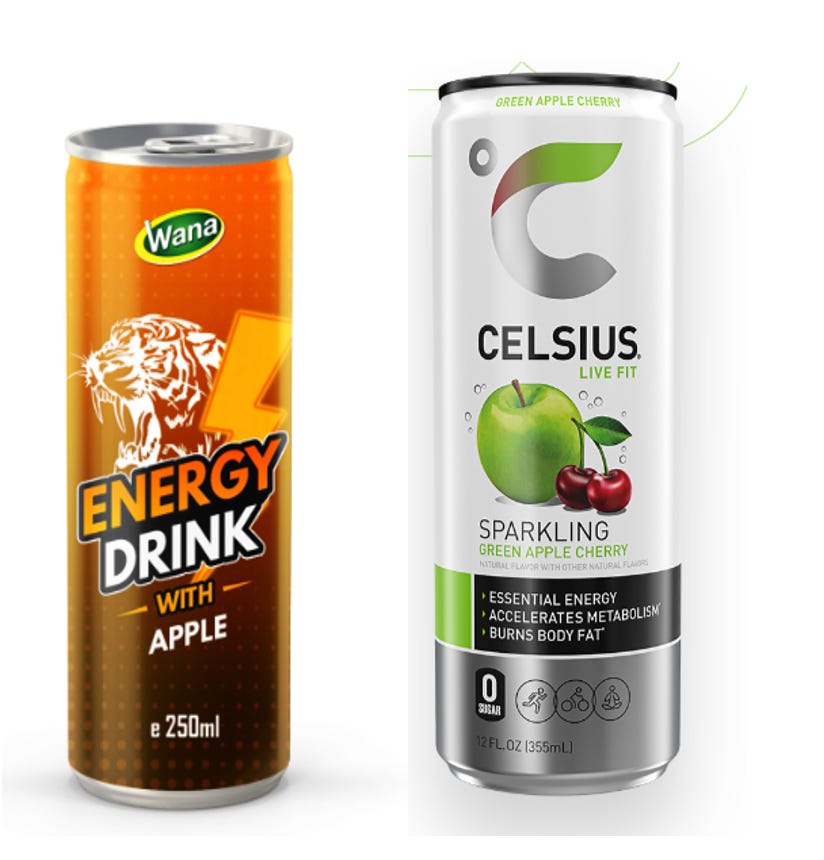
Most energy drinks taste and look the same. Celsius differentiates itself from the other brands by offering more flavors, with more enticing names.
I am emphasizing again that people shop with their eyes. If the price were not a factor, most people would choose Green Apple Cherry over a simple “Energy Drink with Apple” each time.
The company argues its drinks are healthier than others because of its unique, scientifically tested formula!
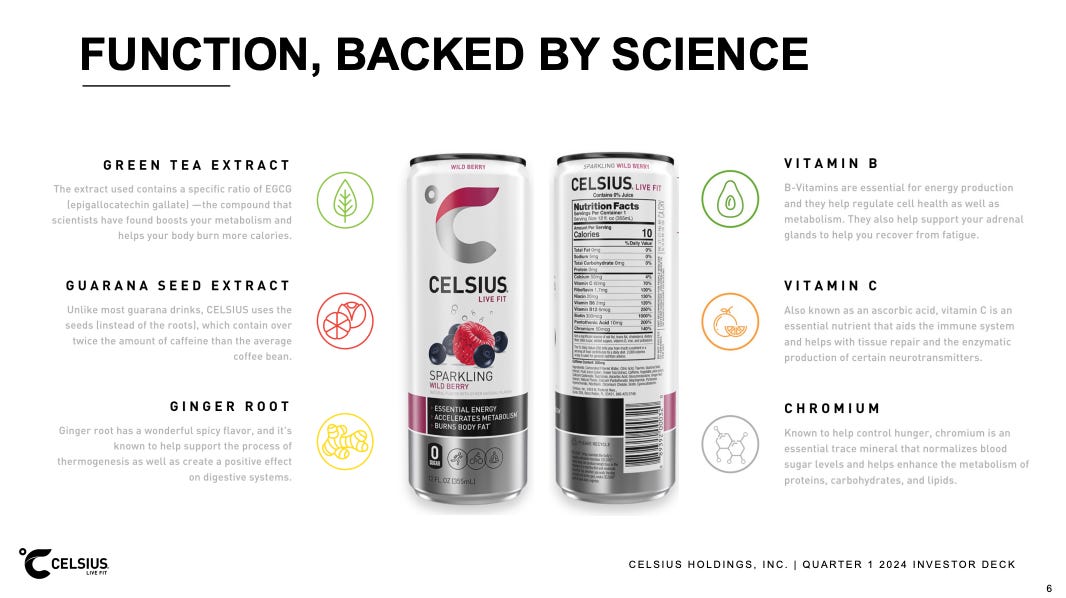
All of their energy drinks contain green tea extract that the company claims boosts metabolism, thus helping one burn more calories. Guarana seed extract is used to infuse the drinks with caffeine. Ginger root supports the digestive system. Vitamins B and C are added to support overall health, help relieve fatigue, and support the immune system. Chromium mineral reportedly helps normalize blood sugar levels and enhances metabolism.
Essentially, Celsius is similar to vitamin water but with caffeine!
Many gym goers and people with active lifestyles have been drinking vitamin water for its various added benefits. At the same time, they were drinking coffee or energy drinks when they needed a pick-me-up. Celsius offers a middle option, combining both together.
With this strategy, Celsius could steal market share not only from coffee and energy drinks but also from soda and vitamin water!
1.2. Manufacturing
In the beverage industry, there are lots of manufacturing strategies. Some brands handle their production independently, while Coca-Cola famously sells the syrup to hundreds of regional bottling plants.
Celsius doesn’t own any manufacturing facilities, the company outsources the manufacturing to co-packers.
“Our functional energy drinks, on-the-go powders, and supplements are produced by well-established third-party beverage co-packers. Utilizing these co-packers, strategically located across the, enables us to efficiently produce and distribute our products. We procure most ingredients and all packaging materials, while our co-packers handle assembly and charge us a fee on a per-case basis.” Celsius 2025 10K
A co-packer is a company that specializes in manufacturing a particular product but doesn’t have a brand and distribution of its own.
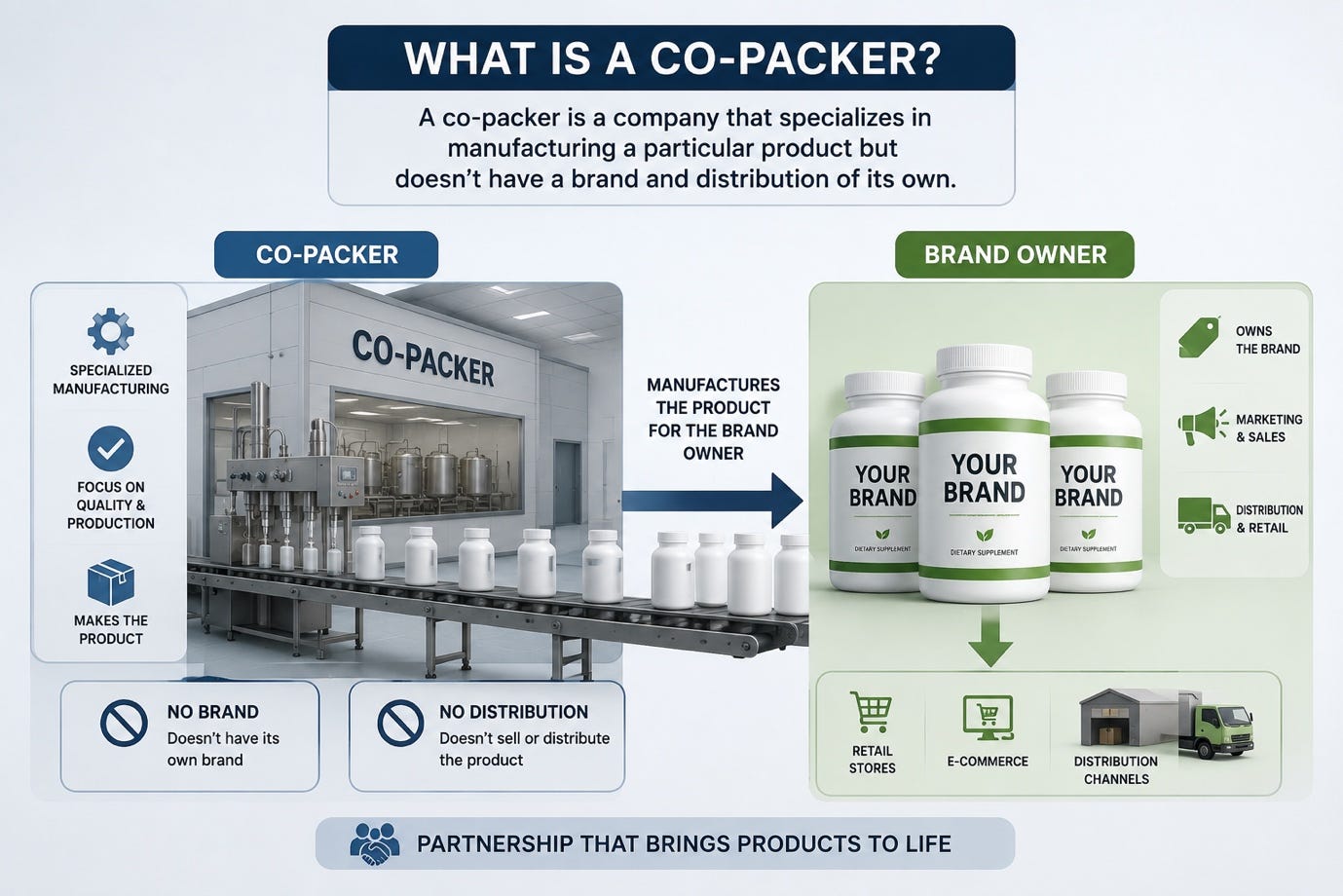
Large grocery chains use these companies to manufacture their store-brand goods such as cheese, snacks, candy, drinks, etc. The advantage of this model is that each side can focus on their core competency, an activity they are an expert in.
Co-packers focus on being the best at manufacturing, whilst the client can focus on branding and generating demand for the end product.
Celsius is not a beverage manufacturing company, rather, it is a beverage marketing company!
Celsius benefits greatly from this arrangement.
The company doesn’t need to incur large expenses connected to building its own manufacturing plants. Furthermore, it allows for faster expansion. Manufacturing plants have maximum capacity, and they often take many years to build. However, there are plenty of co-packers who, by just changing the packaging and pumping different ingredients through the pipes, can manufacture a lot of Celsius drinks in a relatively short time.
Another benefit of this strategy is the ease of international expansion.
International shipping is expensive, and costs are calculated based on weight. Beverages generally tend to have a low value per KG shipped, making it uneconomical to transport them for long distances.
This is one of the main reasons why Coca-Cola has hundreds of bottling plants. Celsius is utilizing a similar strategy in Europe, with the company having signed an agreement with the Japanese company Suntory to be an exclusive manufacturer and distributor of Celsius energy drinks in certain markets.
Celsius will likely sign more such agreements in other geographies.
1.3. Alani Nu
In my previous Celsius reports, I talked about how, with “feminine marketing,” Celsius has managed to attract a lot of women to the energy drink category. (I will expand on this in the next chapters)
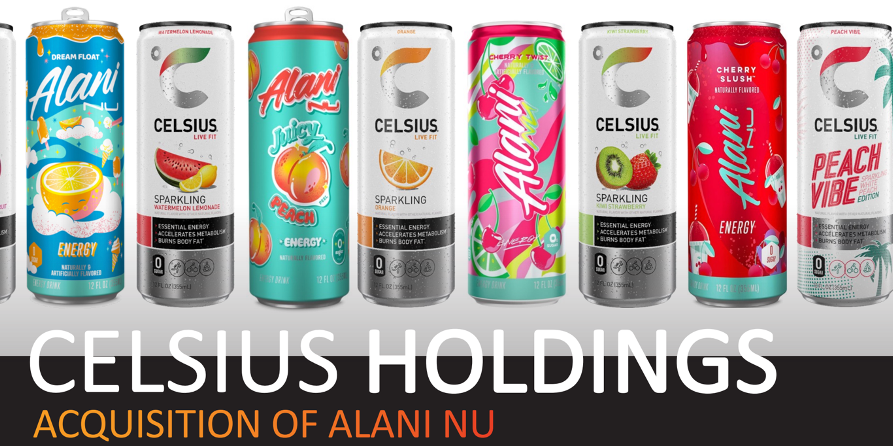
Well, Alani has taken that to another level!
Red Bull and Monster are believed to generate 80% of their sales from men, whilst Celsius is about 50/50.
Alani is 90% female!

The brand is especially strong with GenZ and millennial women.
This is why the company paid $1.8B to acquire 100% of Alani Nutrition and all its subsidiaries through a mix of cash and equity! Alani shareholders became 8.7% equity owners of the combined company,
Celsius paid 3 times Alani’s 2024 revenue and 12 times fully synergized Adj EBITDA!
The acquisition of Alani Nu was a strategic move aimed at strengthening Celsius’s market position, expanding its consumer base, and leveraging synergies between the two brands.
But most importantly, this was a defensive acquisition!
I find it extremely likely that if Celsius hadn’t acquired Alani, Red Bull, Monster, or another beverage giant would have done so!
This means that growing new brands is not as easy as it once was. Consolidation is coming, and Celsius must act accordingly. By acquiring Alani, Celsius prevents a competitor from acquiring this young and promising brand.
There is no doubt that Monster, Red Bull, or Nestle could have used their scale and distribution network to turbocharge Alani’s growth. This would have put pressure on Celsius’s growth and margins. By paying $1.8B now, Celsius could be preventing billions of losses in the future.
So far, it seems that Alani Nu is on a path to generate extremely strong returns for the company!
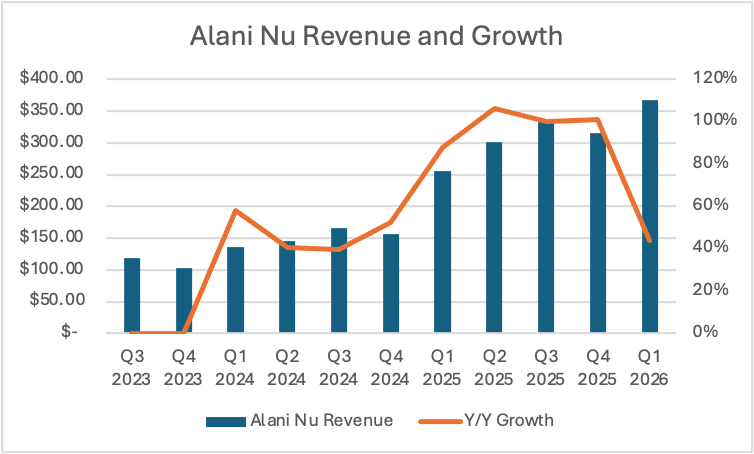
In Q4 2025, Alani Nu grew revenues by an incredibly strong 101% Y/Y to $315.6M!
This means that in Q4 2025, Alani Nu’s revenues were about 44% of Celius. I think this acquisition was not only smart, but it seems that in just a few years, analysts will look back at it as a bargain.
Giving up 8.7% of your equity, some cash, and debt seems like a great deal if, already in the first quarters post-acquisition, it grows by over 100% Y/Y.
As of 2025, Alani Nu held a 6.4% energy drink market share in the US, an increase from 3.2% Y/Y!
In pure dollar terms, during Q3 2025, Alani Nu was the second fastest-growing energy drink brand in the US, only behind Red Bull.
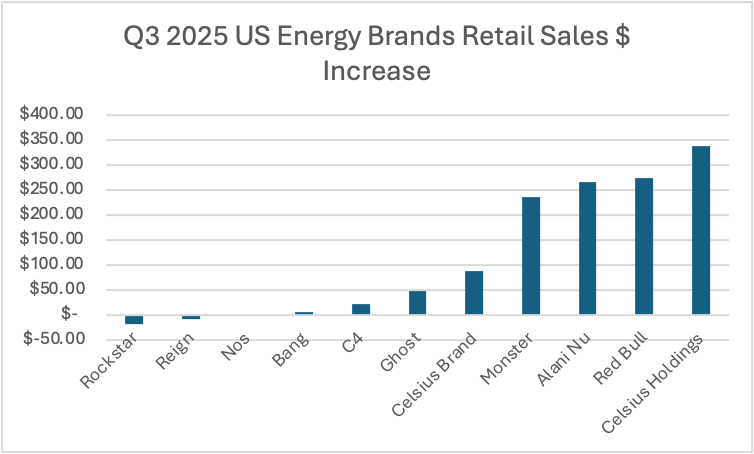
Red Bull grew retail energy drink sales in the US by $275M, compared to the $266M of Alani Nu. Monster, the second largest energy drink brand, grew retail sales by $234M.
While as a portfolio, Celsius brands grew a healthy $337M, individually, the Celsius brand achieved decent growth of $88M.
1.4. Rockstar
As part of the expanded partnership with Pepsi announced last summer, Celsius acquired Rockstar Energy’s US and Canada business from Pepsi for $585M.
Rockstar is your classic 2000s energy drink brand that uses the same design and marketing elements as Monster and Red Bull.
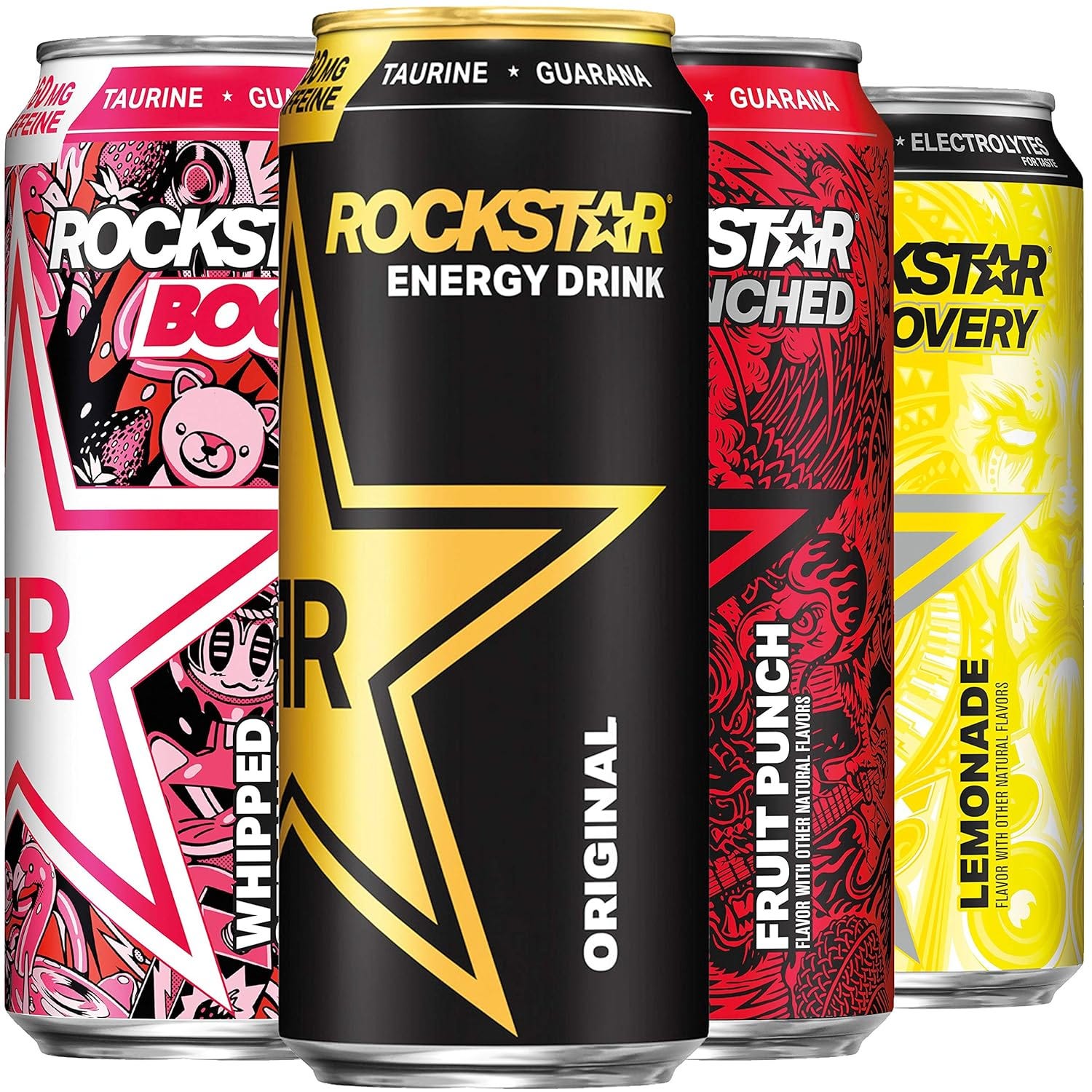
Founded in 2001, the brand has often been associated with partying, extreme sports, and music festivals, with “Party like a Rockstar” being its famous tagline.