
Take Two Investment Thesis!
Here is why I have made $TTWO 3.4% of my portfolio.

While video games have historically been looked down on as something “only kids do”, that is no longer the case.
Technological advances have made video games better, more engaging, and easier to play than ever before. Today, video games are popular with adults and kids alike and are a fast-growing $330B industry poised for rapid changes.
With $6.6B in revenues, Take-Two Interactive is the 10th largest video game company in the world!
However, T2’s fortunes are set to change rapidly, with the release of the most anticipated entertainment product in human history.
Grand Theft Auto 6 is set to be released on 19 November 2026.

I firmly believe that GTA 6 will be completely transformative for the company, with sales and profits way above current analyst estimates.
Analysts estimate that about 40M units will be sold in the first 12 months, largely based on T2 sandbagged fiscal 2027 guidance.
However, early reports suggest that pre-orders of the game have already reached $3B, an absolutely insane figure.
I see an asymmetric upside opportunity, with T2 stock being essentially flat for the past year, despite the bazooka of cash that’s coming their way.
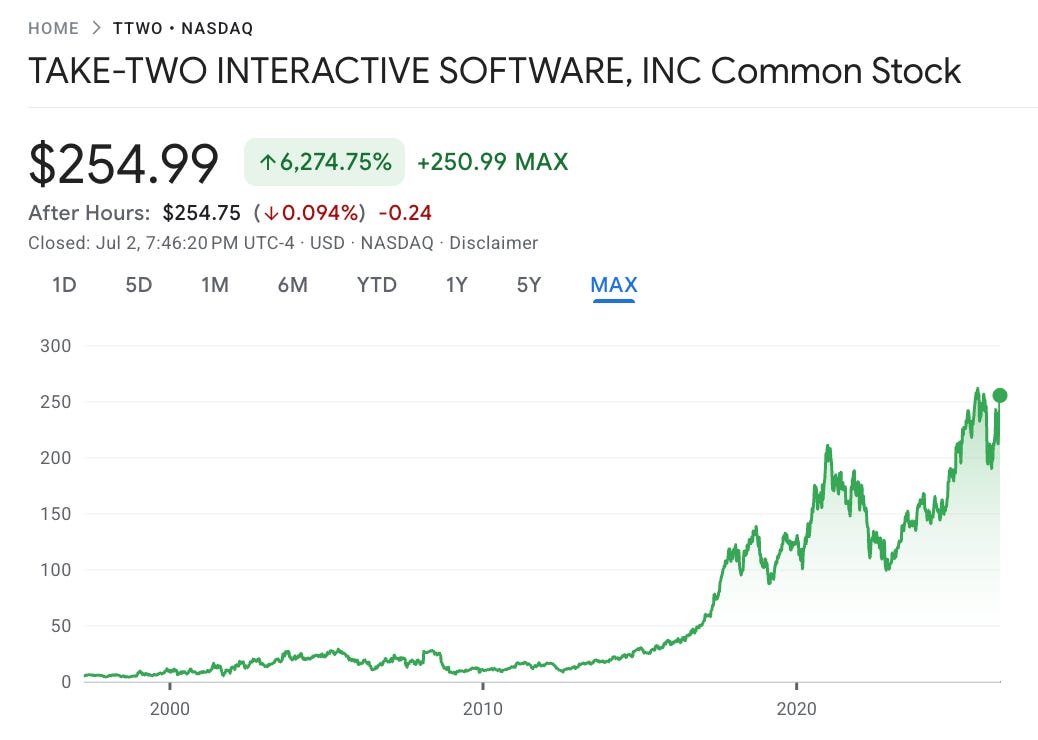
After the release of GTA 5 in 2013, T2 stock went on a generational run, rising by 673% in the next 5 years.
I foresee the release of GTA 6 being a similar catalyst, with T2 ready for the next leg up.
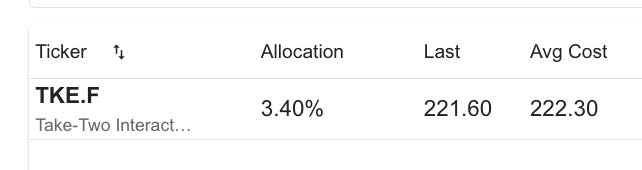
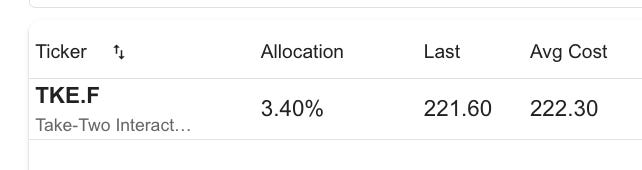
For this reason, I have opened a 3.4% starter position in Take Two’s German listing $TKE @ €222.30 a share in the Global Equity Portfolio.
I see 128% upside in the next 3 years in my base-case scenario.
185% in the mid-case scenario.
228-310% in the bull-case scenario.
In this Take Two Interactive Investment Thesis report, I will explain why I have purchased this stock.
Furthermore, I will explain the company’s business model, look at the game portfolio, with a huge focus on the upcoming GTA 6.
I will conclude this report with a 3-year valuation model.
Let’s begin.
1. Business Mode
2. Shift to Mobile
3. GTA 6
4. Rest of the Portfolio
5. Analyst Estimates
6. Valuation Model
7. Conclusion
1. Business Model
Take-Two (T2) is a global video game developer and distributor through 3 main brands:
Rockstar
2K
Zynga
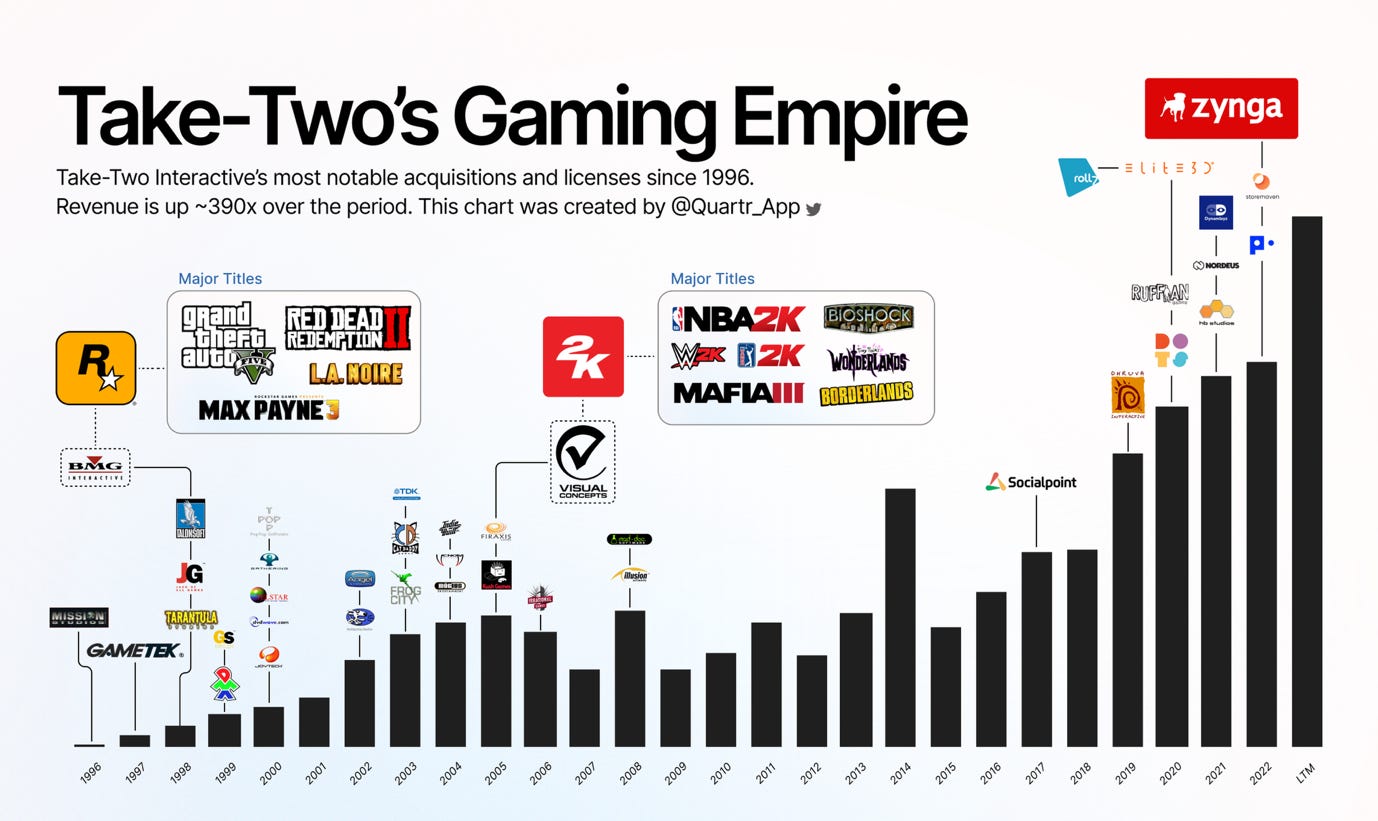
Rockstar is the developer of its flagship title, Grand Theft Auto, and the company has spent a reported $2B to develop the next GTA 6, but we will expand on it later in the report.
2K is most famous for the development of its basketball-themed video game NBA2K. But this division also produces best-selling titles such as Bioshock, Borderlands, Civilization, and Mafia.
Zynga is the T2s mobile gaming arm, responsible for huge hits such as FarmVille. This division was acquired for $12.7B in 2022, which later proved disastrous. I will expand on it in a bit.
To fully understand T2 and its business model, we need to look at:
Game design cycle
One-time purchases
In-game purchases
Subscriptions
Cloud gaming
1.1. Game Design Cycle
The video game design and development cycle is one of the most complicated production processes in any creative industry. It blends software engineering, screenwriting, music composition, and large-scale project management.
Studios spend years and tens and sometimes hundreds of millions of dollars to develop a game, without a guarantee of success.
Game development largely follows a cycle:
Pre-production
Production
Alpha and beta testing
Launch
Post-production
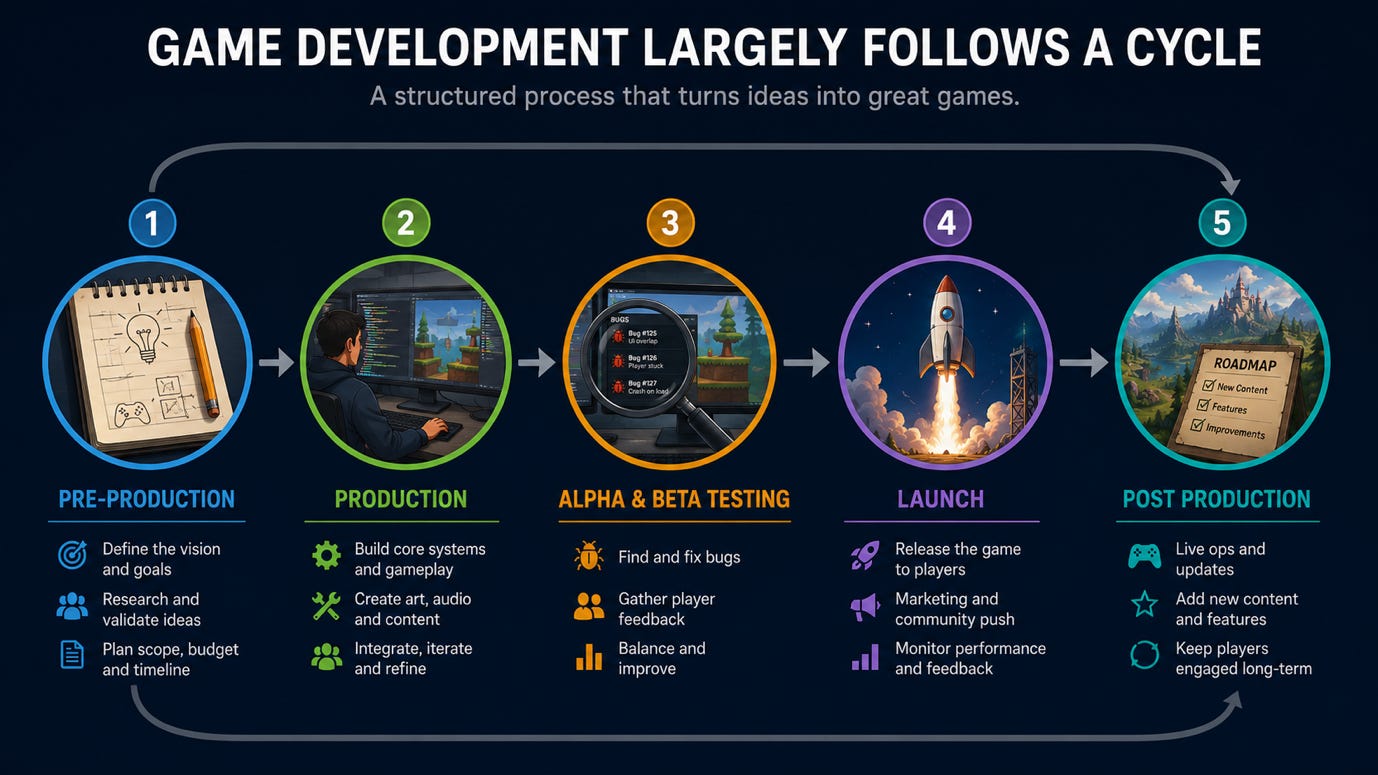
The cycle begins with pre-production, which could span anywhere from 6 months to 2 years and consumes about 10% to 15% of the total development budget.
During this foundational phase, a small core team of directors, writers, and lead designers maps out the game’s core concept, target audience, and primary platform architecture.
Simultaneously, programmers create prototypes using simple shapes to test if the basic gameplay mechanics, like jumping or driving, are actually engaging before scaling up production. Producers use the end of this phase to finalize budgets and establish strict milestone schedules for the hiring surge ahead.
Once the blueprint is approved, the project enters production, the longest and most expensive phase of the entire cycle.
Lasting anywhere from 2 to 5-plus years for major AAA titles, this stage devours roughly 60% to 70% of the total budget as the studio scales up to maximum staff capacity across multiple departments.
Artists and animators translate concept art into 3D models and use motion capture to create lifelike character movements, while software engineers concurrently write the underlying engine code, physics systems, and gameplay.
Writers, voice actors, and orchestral composers record the narrative and audio components, which level designers then piece together to construct the actual physical environments, pacing out every enemy encounter and story beat.
After pieces of the game are stitched together into a cohesive build, the project moves to the alpha and beta testing phases.
Testing could take 6 months to a year and account for 10% to 15% of the development costs.
Next, we get to the launch phase, which is an intense, highly concentrated window lasting 1 to 3 months that requires about 5% of the overall budget.
Going Gold signifies that the launch build has been locked and submitted to console manufacturers like Sony, Microsoft, or Nintendo for first-party certification to ensure it doesn’t violate operating system security or stability policies.
While the physical manufacturing plants or digital storefronts prepare for mass distribution, the development team shifts immediately to monitoring day-one stability. They spend these final weeks compiling critical bug fixes into mandatory software updates.
In today’s gaming landscape, the launch day is no longer the finish line but the start of the post-production or live service phase.
Funded by recurring consumer spending and DLC sales, this stage requires a downsized but highly efficient team to monitor real-world player telemetry, optimize server infrastructure, and deploy rapid stability fixes.
Designers and artists continuously develop seasonal updates, cosmetic expansions, and new gameplay features to prevent community fatigue and maintain an active player base.
For successful titles, this phase operates as a self-sustaining ecosystem that generates high-margin revenue long after the core game’s initial release.
Overall game development is a long and very detailed, tedious process where a lot of things can go wrong. To reduce volatility, Take Two uses 3 distinct design cycle speeds to balance blockbuster volatility with steady monetization.
Low-speed, high-polish cycle
Medium-speed cycle
High-speed cycle
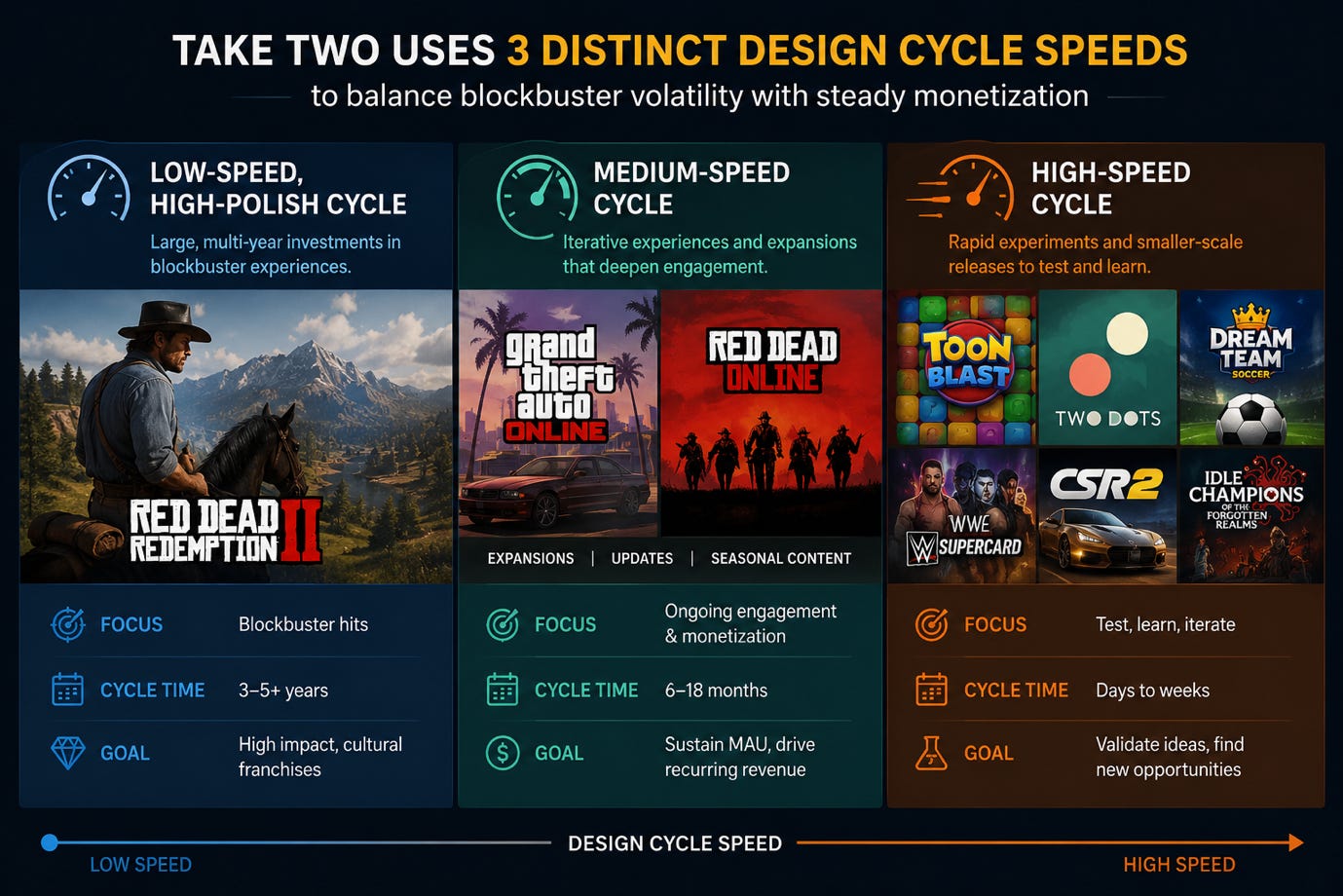
Rockstar operates on a low-speed, high-polish cycle.
It releases games infrequently but ensures exceptional polish to build unmatched pricing power and game quality. GTA6, which has been in active development for a decade, was given an unlimited budget by management to achieve perfection at launch.
2K operates on a medium-speed cycle.
It releases annualized sports simulation games to keep engagement high, while releasing sequels of core franchises every few years.
Zynga operates on a high-speed mobile cycle.
It uses live-ops updates, mobile analytics, and direct monetization to generate steady daily bookings.
1.2. One-Time Purchases
Upfront one-time purchases remain crucial for driving game monetisation.
T2 is using the popularity and anticipation of the upcoming GTA 6 to test the upper limits of pricing power. The publisher set a new price benchmark by pricing the Standard Edition of GTA6 at $79.99 and the digital Ultimate Edition at $99.99.
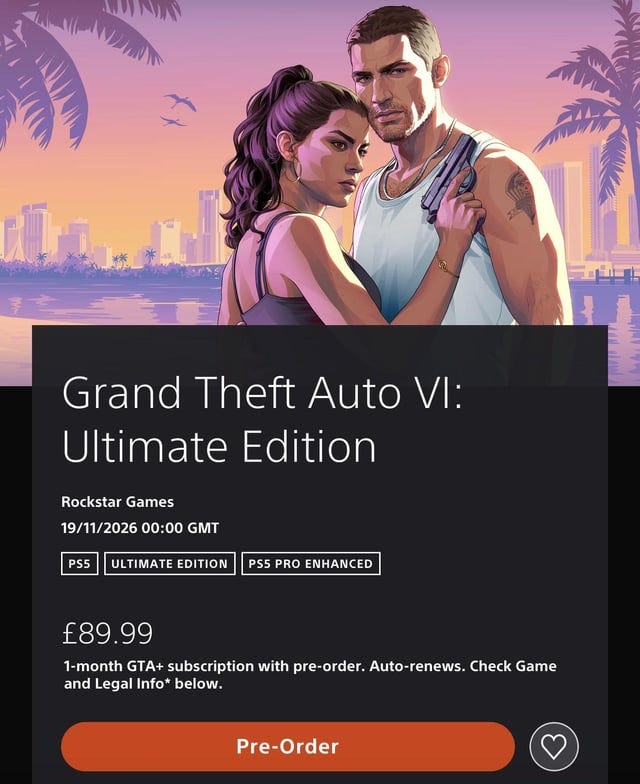
This is the 1st time a major console game has launched with a base price above $70.
This pricing strategy significantly improves the unit economics. Based on Bank of America estimates of 45M copies sold in its 1st year, the extra $10 generates $450M in additional gross revenue before platform fees and taxes.
While digital platforms like Sony and Microsoft take a 30% cut of digital sales, the price hike remains highly accretive to margins.
To reduce physical manufacturing costs, prevent resale, and avoid leaks, boxed copies of the game will not contain discs.
Instead, they will only include digital download codes inside the box. Digital Foundry noted that this also gives the developers extra time to work on the game right up to the launch date.
While revenues from one-time sales remain important, the business model is moving away from one-time sales towards subscriptions and in-game purchases.
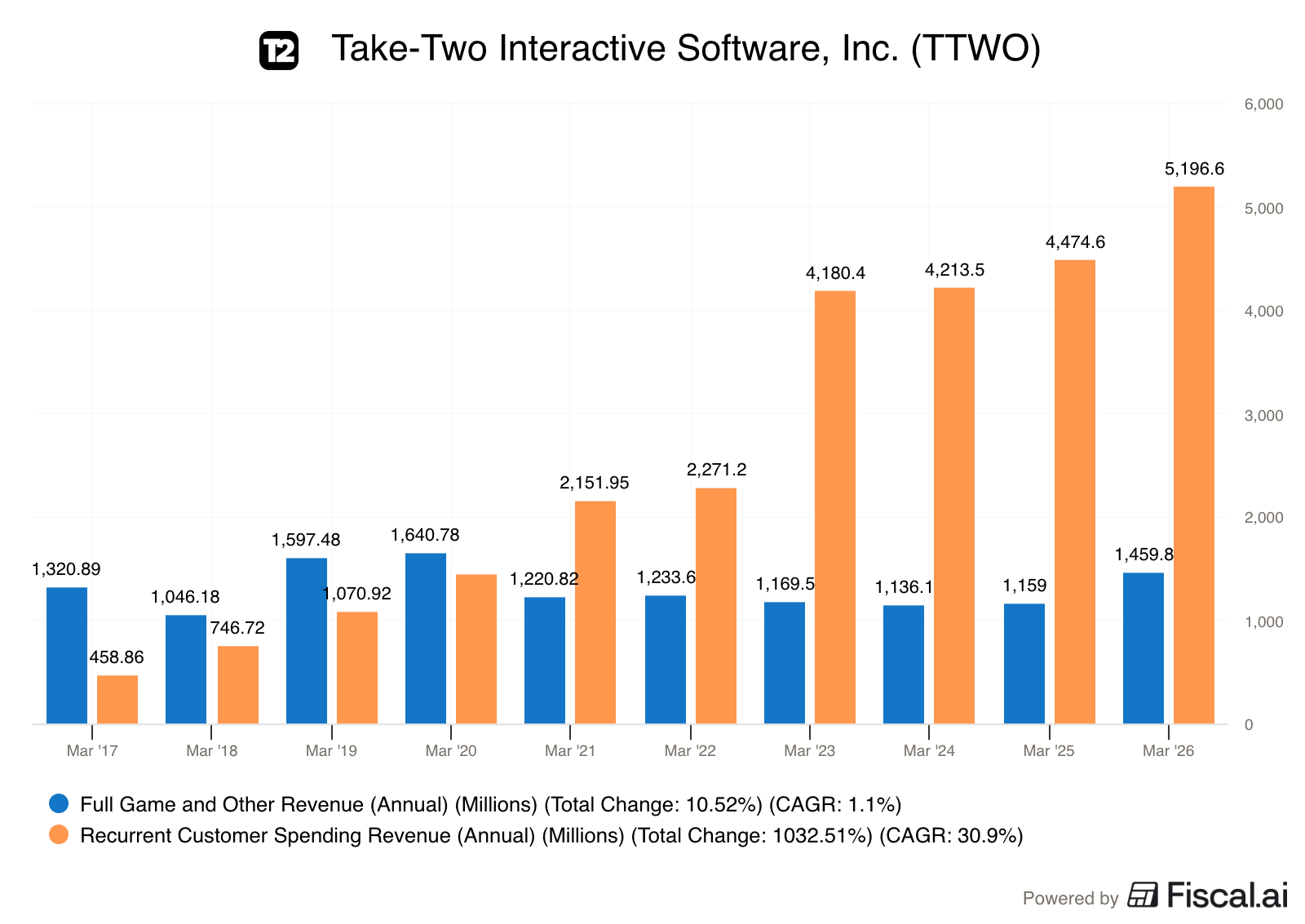
As we see in the above chart, full game revenues have been essentially flat since 2017, only growing by 10.5%.
However, recurrent customer spending revenues from subscriptions and in-game purchases have grown by 10x from $459M in 2017 to $5.2B in 2026.
This is a CAGR of 30.9%, far outpacing the growth of full game sales during this period. While the acquisition of Zynga was a huge driver for this in 2023, we see that recurrent customer spending was growing strongly even before that.
The release of GTA Online, Rockstar subscriptions, and the upcoming release of GTA6 are likely to be a massive driver of this revenue segment.
1.3. Subscriptions
Subscriptions play an increasingly larger role in increasing player engagement and achieving a higher ARPU.
Rather than launching a new independent subscription service, Take Two has integrated its game catalog into Rockstar’s popular GTA+ service.

GTA+ memberships nearly grew 2-fold Y/Y in FY 2026, reaching an all-time high of over 1.3M subscribers in January 2026.
Reportedly, this user base generated $10.79M in high-margin revenue for that month alone. To capitalize on this, the subscription price was raised from $5.99 to $7.99.
Meanwhile, 2K has rotated sports titles like NBA 2K26 into GTA+ to test a Game Pass-style rotation.
Subscribers receive free permanent content packs and virtual currency to spark engagement and encourage them to buy the game once it rotates out.
Furthermore, to drive mass adoption, Rockstar is giving 1 free month of GTA+ with all digital preorders of GTA6, pulling millions of console players directly into the recurring monetization funnel.
Quick note, this article is also available as a YouTube video:
1.4. In-Game Purchases
In-game purchases are a growing monetization strategy.
Instead of charging a lump sum to download a game, publishers monetize the experience over time by offering optional digital transactions embedded directly into the gameplay.
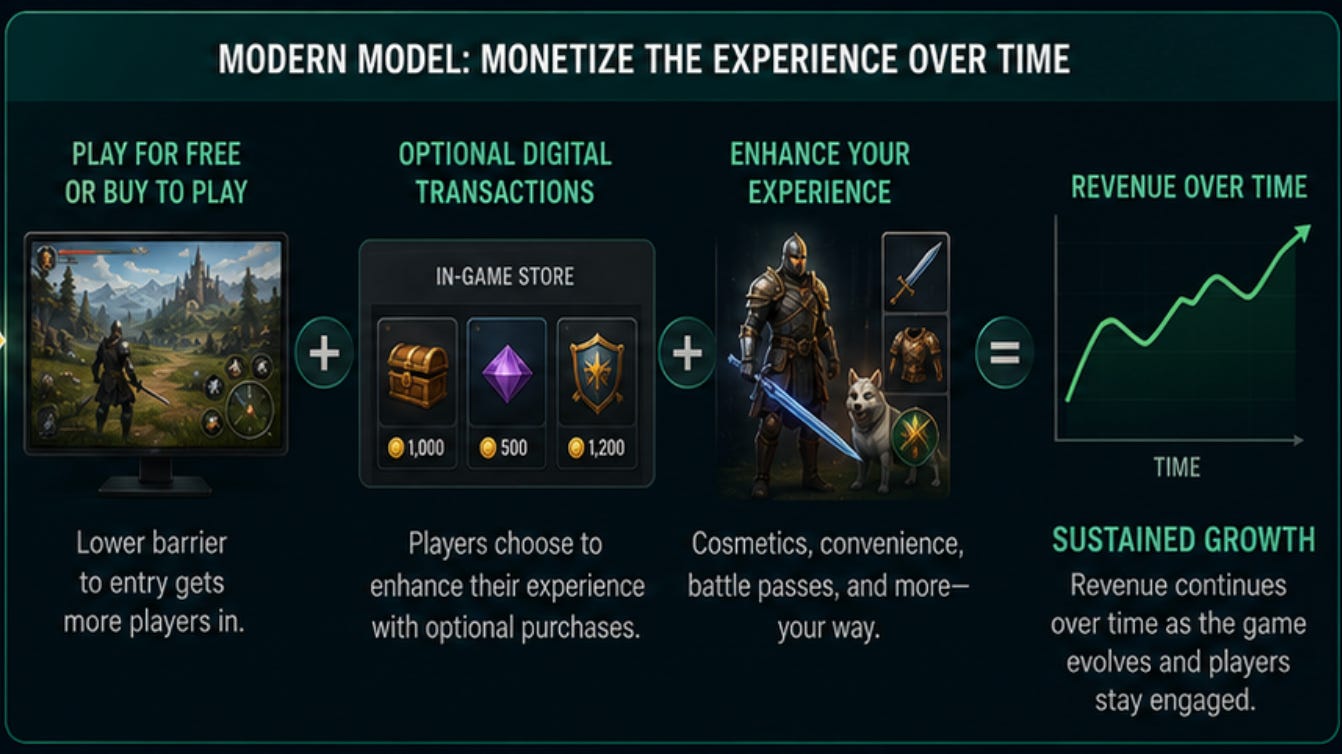
This strategy heavily exploits the fact that roughly 5-10% of gamers generate the vast majority of all revenue.
These are the customers who are willing to spend hundreds or even thousands of dollars to buy in-game currency, gold, crystals, special passes, or other things that help improve their position in the game.
By capitalizing on micro-transactions, publishers can steadily increase the ARPU far beyond what a traditional one-time retail price tag would allow. No one would buy a game for $500, but many will pay $500 to have an easier time playing a popular game. Gamers pay to elevate their in-game status.
In fiscal 2026, NBA 2K recurrent spending grew more than 30%, mobile rose 13%, and GTA Online increased 6%.
In Q4 2026, GTA Online recurrent spending rose 5% Y/Y, supported by the A Safehouse in the Hills content update, which featured mansion properties and the return of Michael De Santa.
Analysts at Bank of America raised their price target to $368 because GTA Online is expected to use a pay-to-progress model. This model is expected to monetize more effectively than cosmetics-only games like Fortnite.
1.5. Cloud Gaming
The most important thing investors must understand is that the video game industry is in the early stages of transitioning from one-time purchases to cloud streaming and subscriptions!
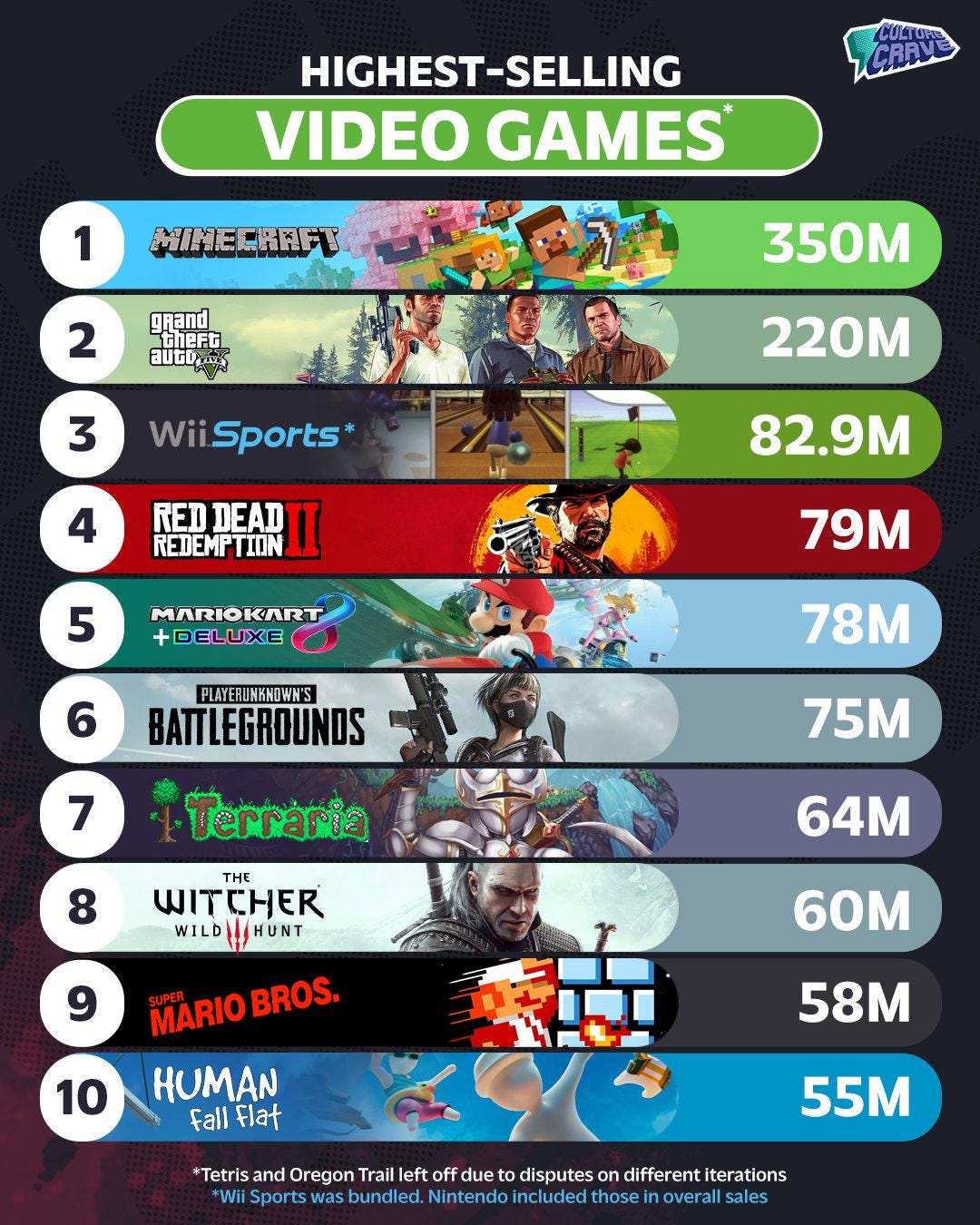
With total global sales of 220M T2s, GTA 5 is the second highest-selling video game in history.
It is estimated that the company has generated close to $9B in lifetime revenues from this game. For instance, total revenues of the company in fiscal 2026 were $6.6B.
This demonstrates how video games are fundamentally hit-driven businesses, as the majority of the sales and profits are generated by just a few blockbuster games!
Cloud gaming could change that!
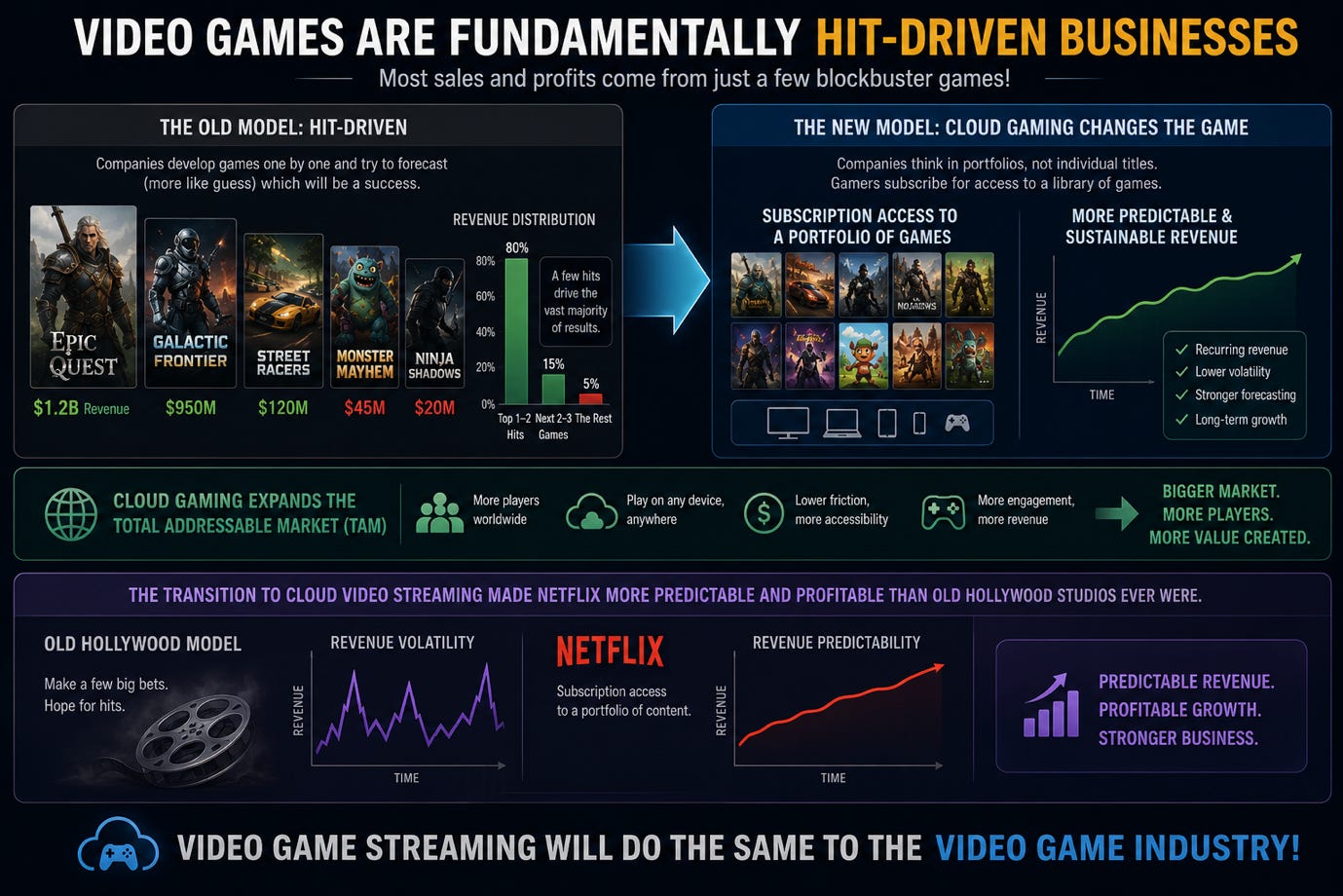
Instead of developing a number of games individually and trying to forecast (more like guess) which video game will be a success, companies will look at their games as part of a portfolio.
Gamers will sign up for a subscription that, for a simple monthly price, will give them access to a portfolio of games, similar to video streaming services such as Netflix, Disney+, and Prime Video.
The transition to cloud-based video game streaming could significantly increase the TAM for video games.
The most advanced video games require powerful PCs or consoles. Millions of people who would like to play some games once in a while are not willing to spend hundreds or even thousands of dollars on such a device. Also, some games are just too demanding for mobile phones.
I am not an avid gamer, but I would love to play the new GTA 6. However, I don’t have a gaming PC, and I am not willing to purchase a console. However, I would be willing to pay a few hundred dollars to stream GTA 6 for a few months.
With cloud gaming, instead of running the game on one’s device, the game is run on AWS, Azure, or Google Cloud’s large and powerful servers, which then stream the video of the game to the device.
In theory, if internet speeds are fast enough, even the most basic devices should be able to run even the most demanding games.
The transition to cloud-based video streaming made Netflix a more predictable and profitable business than old Hollywood studios ever were!
Video game streaming will do the same to the video game industry!
This is why Microsoft paid $7.5B in 2020 to acquire Bethesda and $68.7B in 2022 for Activision Blizzard. They are building a portfolio of games for their cloud gaming subscription offering.
Take Two doesn’t have a video game streaming service, but it could make billions by licensing its older titles to video game streaming services.
Or it could simply pay AWS or Google Cloud to host the games and then stream them.
In any case, in my opinion, the value of TT2’s game portfolio will rapidly increase in the next decade. Video game streaming will create a more consistent cash flow stream than the occasional $10-30 purchases of older games by gamers.
2. Shift to Mobile
The $12.7B acquisition of Zynga in May 2022 transformed T2 from a console-first publisher into a strong mobile game developer.
However, ultimately the Zynga acquisition is viewed as a failure because the company significantly overpaid, buying the mobile game developer at a peak valuation post covid mobile gaming boom.
Additionally, right as the merger closed, Apple implemented its App tracking transparency framework, which allowed users to opt out of data tracking and fundamentally broke Zynga’s ability to efficiently target high-spending players.
Consumer engagement and mobile micro-transaction spending plateaued across the entire industry, leaving T2 holding an asset priced for a peak that was rapidly correcting.
This massive gap between expectation and reality forced the company to incur staggering write-downs, a $2.2B goodwill impairment in 2024 and an even larger $3.6B impairment in 2025.
Essentially, T2 overpaid by $5.73B for the Zynga acquisition.
However, we are starting to see a recovery.
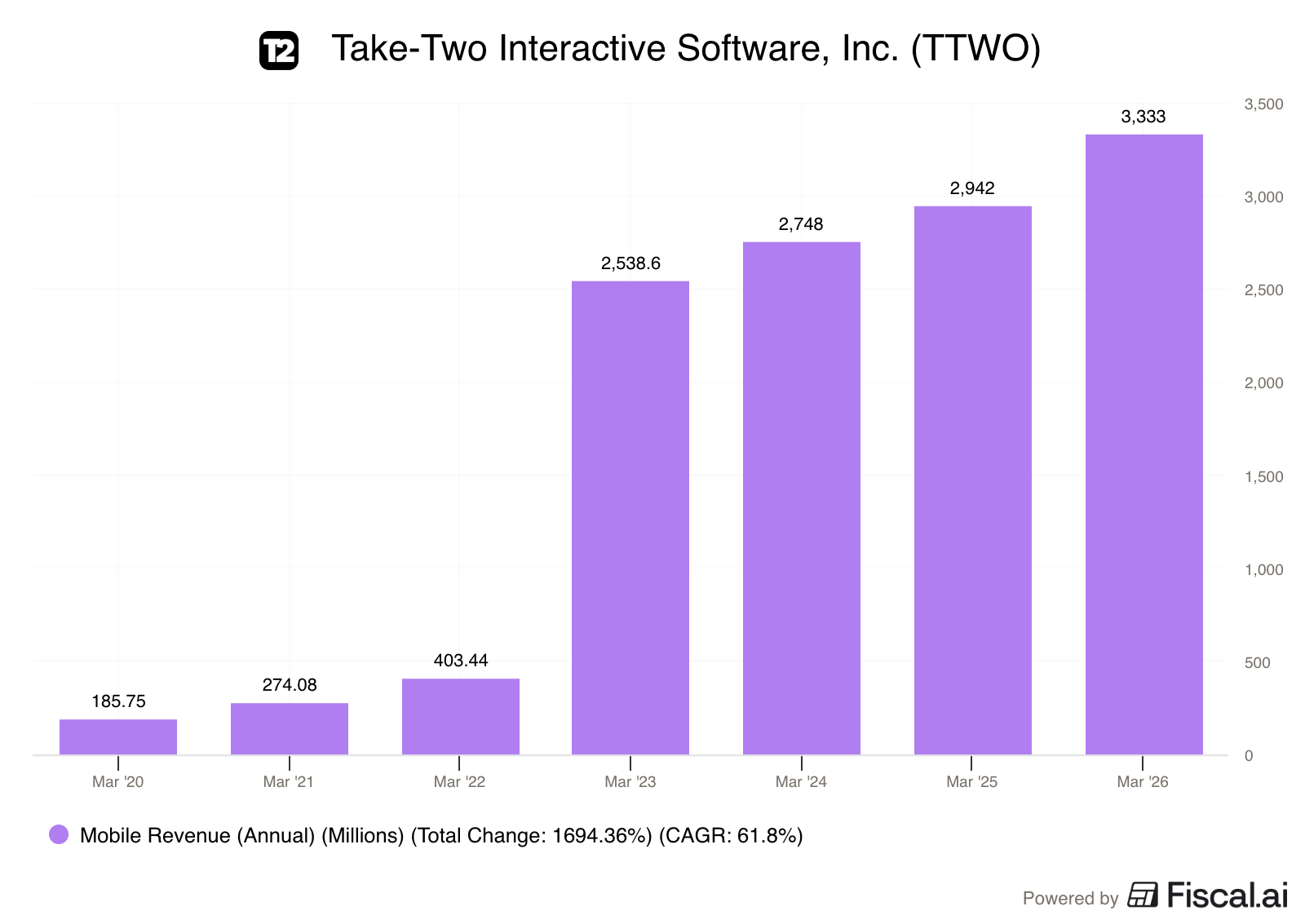
In 2026, mobile revenues recovered from the post covid slowdown, earning $3.3B and representing 49% of total annual bookings and growing 13.3% Y/Y.
Zynga achieved its highest net bookings since the acquisition in 2026. Key mobile performance drivers include Toon Blast, which grew approximately 25% Y/Y, Empires & Puzzles, which grew 5% Y/Y, and Color Block Jam, which grew 15% to reach 66.7M downloads.
Rollic, a Zynga subsidiary, cleared over 3.9B lifetime installs across its casual portfolio.
This mobile presence helps diversify the company away from console hardware cycles.
At the time of the merger, there were expectations that Zynga would help T2 bring its title to mobile, but that has been slower than expected.
However, that is changing with the company partnering with Apple’s mobile gaming subscription service Arcade and Netflix’s gaming to bring its IP to mobile.
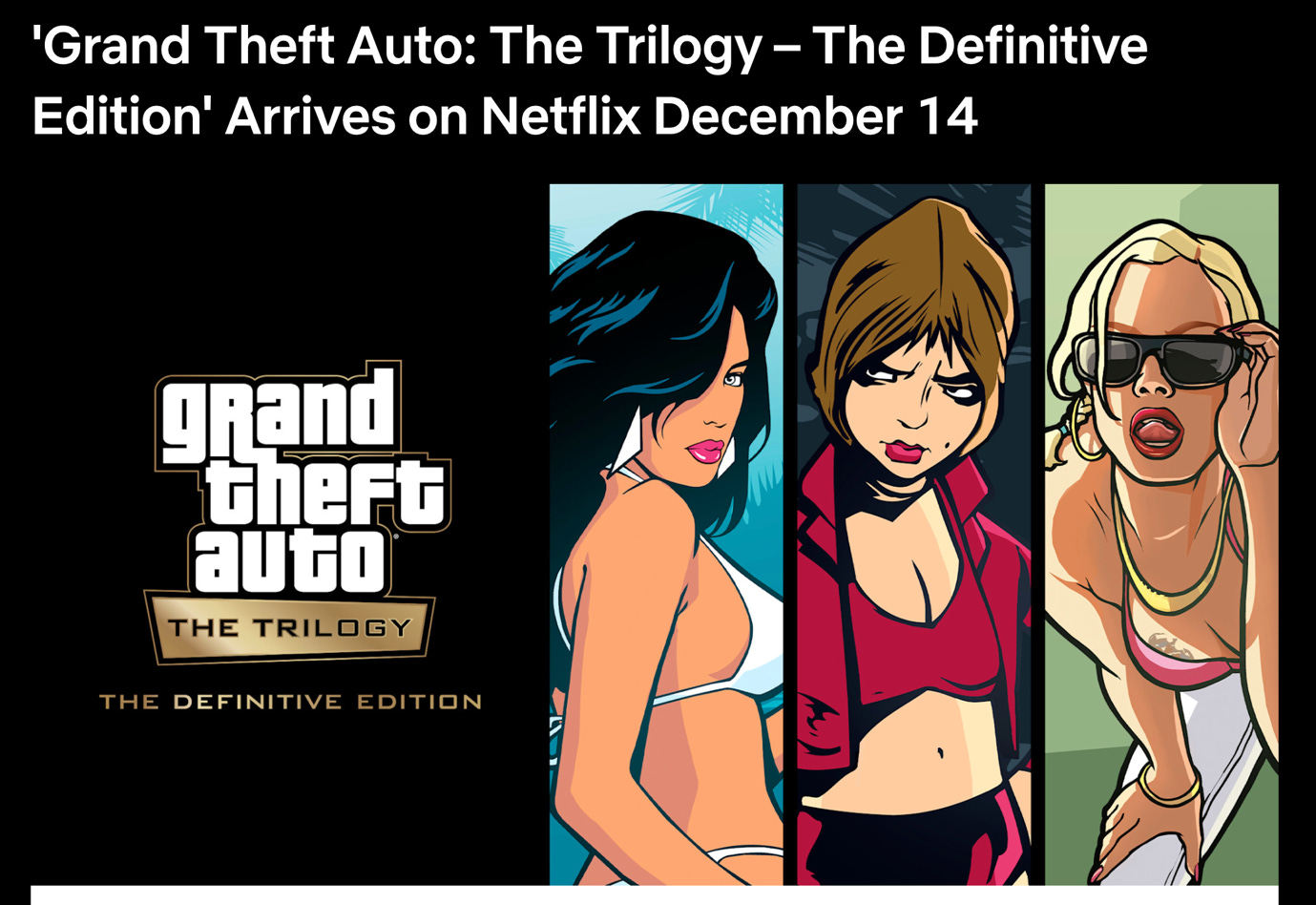
GTA: The Trilogy – The Definitive Edition on Netflix Games generated tens of millions of downloads without requiring heavy new development costs.
Meanwhile, 2K has maintained a massive, highly profitable footprint through its annual mobile premium offerings, such as NBA 2K26 Arcade Edition, which currently sits as a top-5 staple on Apple Arcade.
Overall, mobile will likely become a larger and more important segment for the company.
3. GTA6
I think before discussing the upcoming GTA 6, we need to discuss how truly successful this series has been for the company.
Over the past two decades, the Grand Theft Auto franchise has evolved into one of the most successful, iconic, and critically acclaimed entertainment brands in the world.
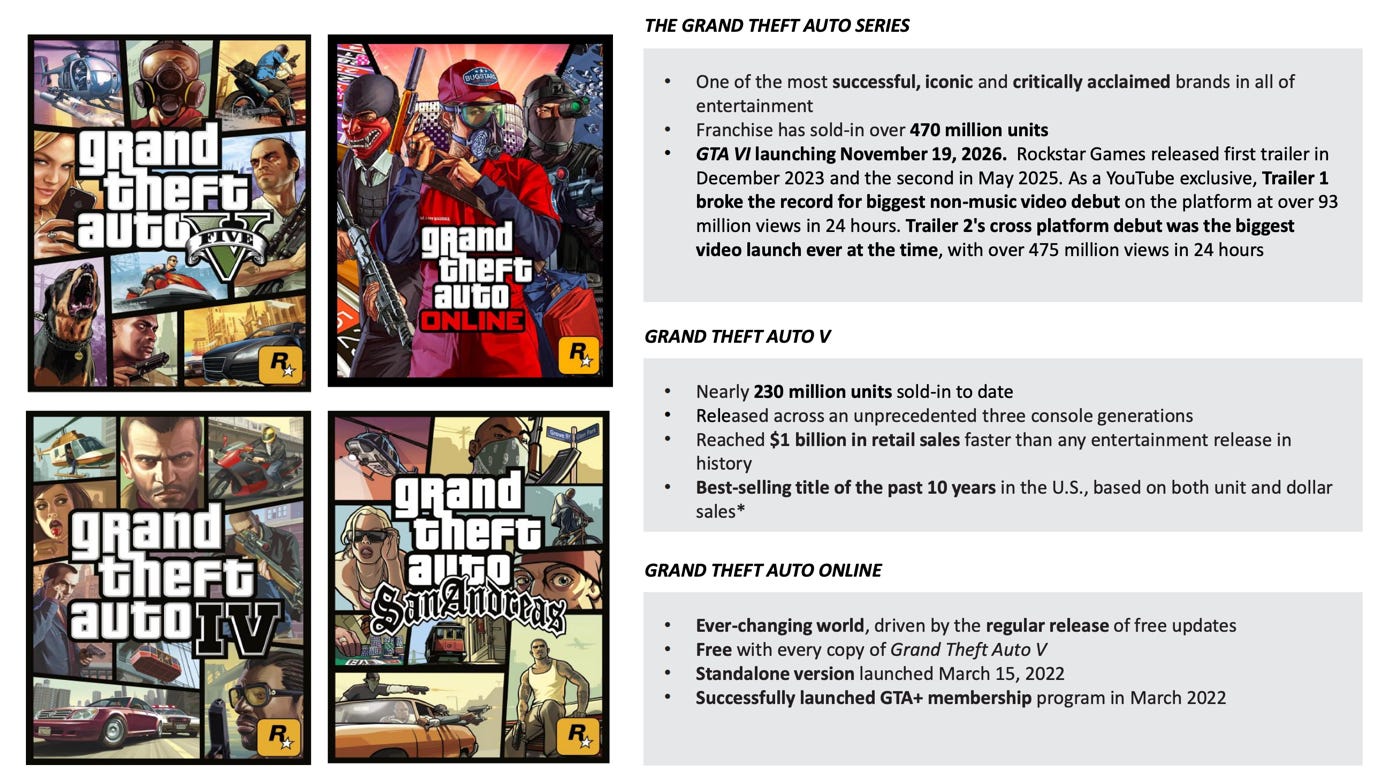
Across the series, Rockstar Games has sold more than 470M copies, with GTA 5 alone accounting for nearly 230M units sold.
The game’s commercial success has been unprecedented, generating over $1B in retail sales faster than any entertainment release in history and remaining the best-selling title of the past decade in the US based on both unit and dollar sales.
The franchise’s success extends well beyond its initial game launches. GTA Online has transformed GTA V into a long-term online platform, consistently retaining players through free content updates and monetization initiatives like GTA+.
This sustained engagement has allowed Rockstar to keep GTA relevant for well over a decade, making the series one of the industry’s most profitable and enduring franchises.
With that level of commercial and cultural success behind it, expectations for GTA 6 are understandably enormous, as Rockstar looks to build on one of the strongest foundations in gaming history.
GTA6 is scheduled to launch on November 19, 2026, exclusively on the latest-generation consoles of PlayStation and Xbox.

It is, without a doubt, the most anticipated entertainment product in human history.
Preorders opened globally on June 25, 2026, with rumors that pre-orders have already exceeded $3B.
In France, retailer CDdiscount reported 6 times more preorders than Call of Duty’s typical launches.
Analysts expect the game to sell 25M copies on day 1 and 40M copies in its 1st year!
However, in my opinion, the success of this game will be multiples higher than even the most bullish professional analysts believe and will transform T2 into a top 5 gaming company.
This is largely because of:
More favourable media landscape
GTA 6 Online
GTA+
In-Game Purchases
3.1. More Favourable Media Landscape
When GTA 5 launched in September 2013, the media landscape was much more complicated for game developers.
More anchored to legacy TV advertising networks, physical retail, and centralized gaming journalism.
The promotional campaign for GTA 5 required a capital-intensive push, and marketing relied heavily on physical placements, such as billboards, bus wraps, and retail-level midnight launches across thousands of brick-and-mortar storefronts.
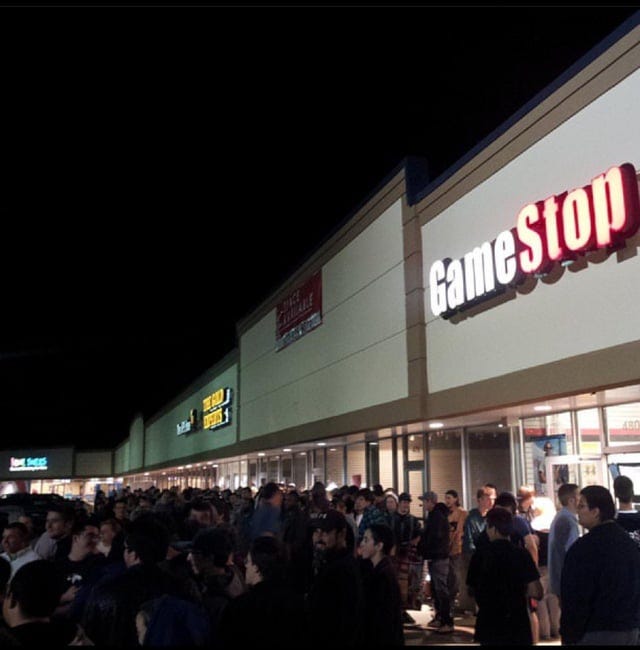
The digital ecosystems that dominate today’s consumer attention were either non-existent or in their infancy.
TikTok had not yet launched, and Twitch was a niche broadcasting site with negligible daily active users relative to its current scale. Meanwhile, YouTube had 1B active users compared to nearly 3B in 2026.
In contrast, the media landscape of 2026 operates on decentralized, algorithmic networks that maximize organic reach with zero marginal distribution cost to the publisher.
The emergence of short-form video on TikTok and live streaming on Twitch has fundamentally changed how entertainment is popularized. In today’s gaming ecosystem, gameplay clips, reaction videos, and community-generated memes spread through the internet at a rapid speed.
Thanks to this organic loop, smaller titles are achieving millions of sales entirely via viral TikTok trends or Twitch streamer popularity.
This shows how modern video games can expand their audience rapidly without traditional advertising expenditure.
Furthermore, the scale of live streaming has reached global levels. Twitch hosts over 35M daily active users and recorded 21B total watch hours in 2024. GTA 5 itself has been a primary beneficiary of this trend, amassing 1.4B hours watched on Twitch in 2024, which represented approximately 9% of all gaming content on the platform.
Truly amazing engagement that the company will use to turbocharge sales of GTA6.
Traditional marketing is no longer the primary driver of adoption. Instead, the internet’s collective engagement drives compounding awareness.
The effectiveness of this organic model was demonstrated by the game’s initial trailer, which shattered viewership records by generating over 93M views in a single day.
Simply put, the professional analysts who are, on average, older and less active in the TikTok, Twitch, and YouTube digital ecosystems are significantly underestimating the impact this new environment will have on GTA 6 sales.
GTA 5 sold 45M copies in the 12 months, and I just don’t see how GTA 6 doesn’t destroy this metric.
3.2. GTA 6 Online, GTA+ and In-Game Purchases
As the industry has shifted, the GTA 6 online and in-game purchases will be much higher revenue and profitability drivers than during the GTA 5 era.
Although Rockstar does not publicly break out GTA Online’s exact revenue, analysts have estimated that the game is generating around $500M in yearly revenues from Shark Cards and GTA+ even nearly a decade after launch.
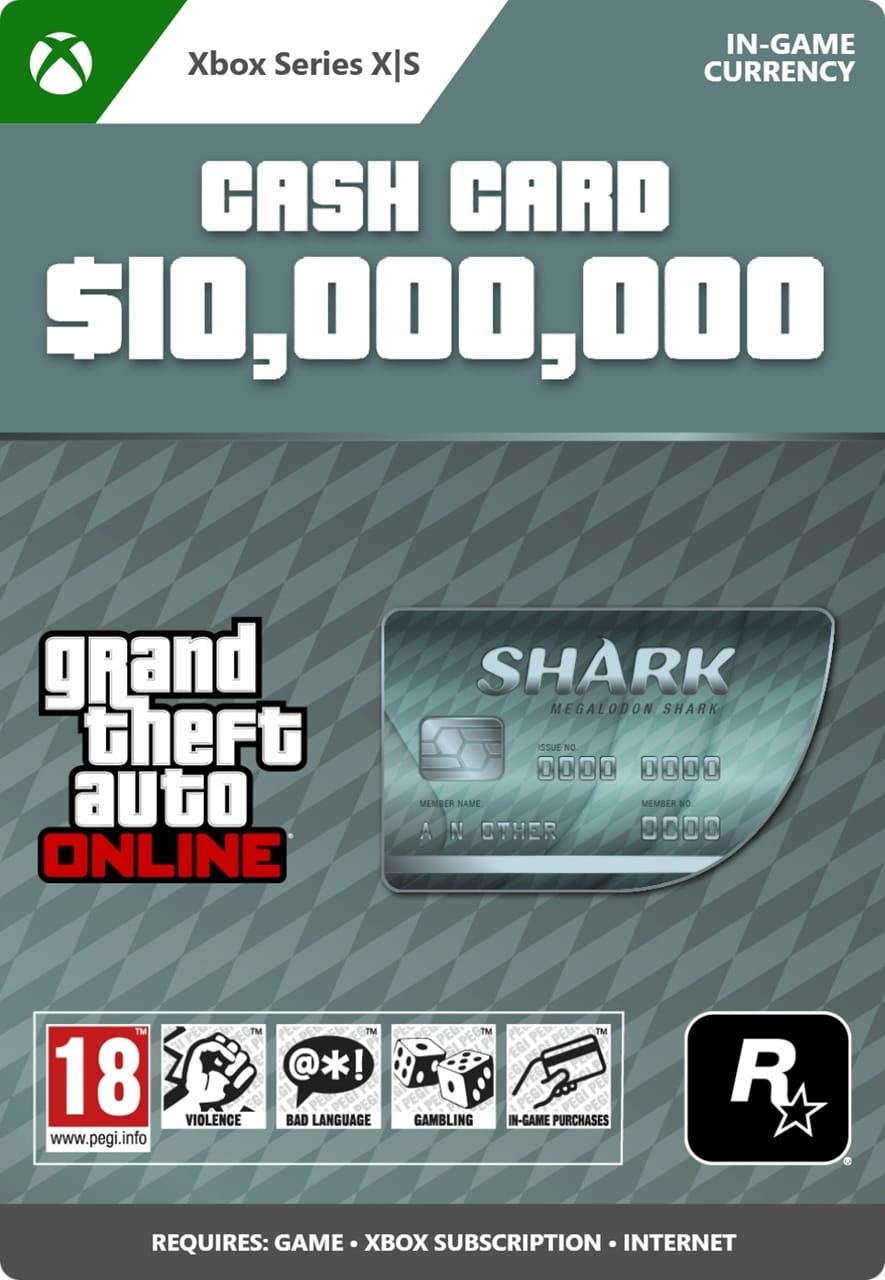
Shark Cards let players buy the in-game currency with real dollars instead of earning it through gameplay.
Imagine if, a decade after the release of GTA 5, GTA Online makes $500M a year, how much will the fully upgraded GTA 6 version of GTA Online make once scaled?
This could realistically become a multi-billion-dollar recurring revenue business. Yes, there is some cannibalization with the existing revenues, but looking at analyst estimates, they seem not to be pricing this in at all.
Furthermore, T2 is deliberately separating the game’s single-player and its multiplayer releases.
Rockstar Games has confirmed that at launch, GTA 6 will be a single-player-only experience, with no multiplayer modes or online components included on day one.
This launch strategy mirrors the successful staggered rollouts of both GTA 5, where GTA Online launched two weeks after the story campaign, and Red Dead Redemption 2.
Furthermore, separating the two releases creates two distinct, highly publicized cultural and commercial events.
This will give Rockstar two separate opportunities to dominate the news cycle. The release of GTA Online will drive more sales for the single-player GTA 5 version.
When the multiplayer version of GTA 6 eventually launches, it will build upon a highly lucrative, structurally integrated ecosystem designed around user-generated content and roleplaying.
Roleplay servers have been central to GTA 5’s long-term engagement, maintaining massive daily player counts and high viewership on Twitch long after standard content updates had run their course.
A roleplay mode is where players act as a character instead of simply playing to win. Rather than focusing on missions or combat, players create stories by interacting with others as if they were living in that game’s world.
On these servers, you create a character with a name, job, personality, and backstory. From there, you stay in character while playing.
For example, you might choose to be a police officer investigating crimes, a business owner running a restaurant, or a criminal planning robberies or smuggling.
The key difference is that everyone is expected to behave as their character would.
If you’re a police officer, you don’t randomly start shooting people. If you’re arrested, you cooperate with the role-play instead of treating it like a normal GTA deathmatch.
These types of experiences are extremely popular, and T2 is positioning to make that a core of the GTA 6 online experience.
This company will transition the custom server community from an external, grey-market ecosystem into an officially sanctioned, regulated, and monetised platform.
Historically, custom server hosts operated independent donation models or unapproved transactions to fund server costs and generate profit. Now, Rockstar will act as the central clearinghouse, enabling creators to charge paid access fees for premium servers, sell custom cosmetics, and distribute user-generated gameplay modes, of course for a fee.
Furthermore, as I mentioned previously in the business model chapter, the industry is moving towards micro-transactions.
T2 is positioning GTA 6 to rapidly expand this recurring revenue model by integrating the GTA+ subscription service directly into the game’s launch.
At its standard price of $8 per month, GTA+ provides players with a consistent flow of premium content in the current iteration of GTA Online.
Players who pre-order GTA 6 get one month of GTA+ for free. Crucially, this promotional month comes with an automatic subscription.
So unless a player actively cancels the subscription before the trial period expires, it automatically converts into a paid monthly subscription.
Given the massive scale of early pre-orders, converting even a fraction of those players into long-term subscribers creates a highly durable, high-margin monthly cash flow.
4. Rest of the Portfolio
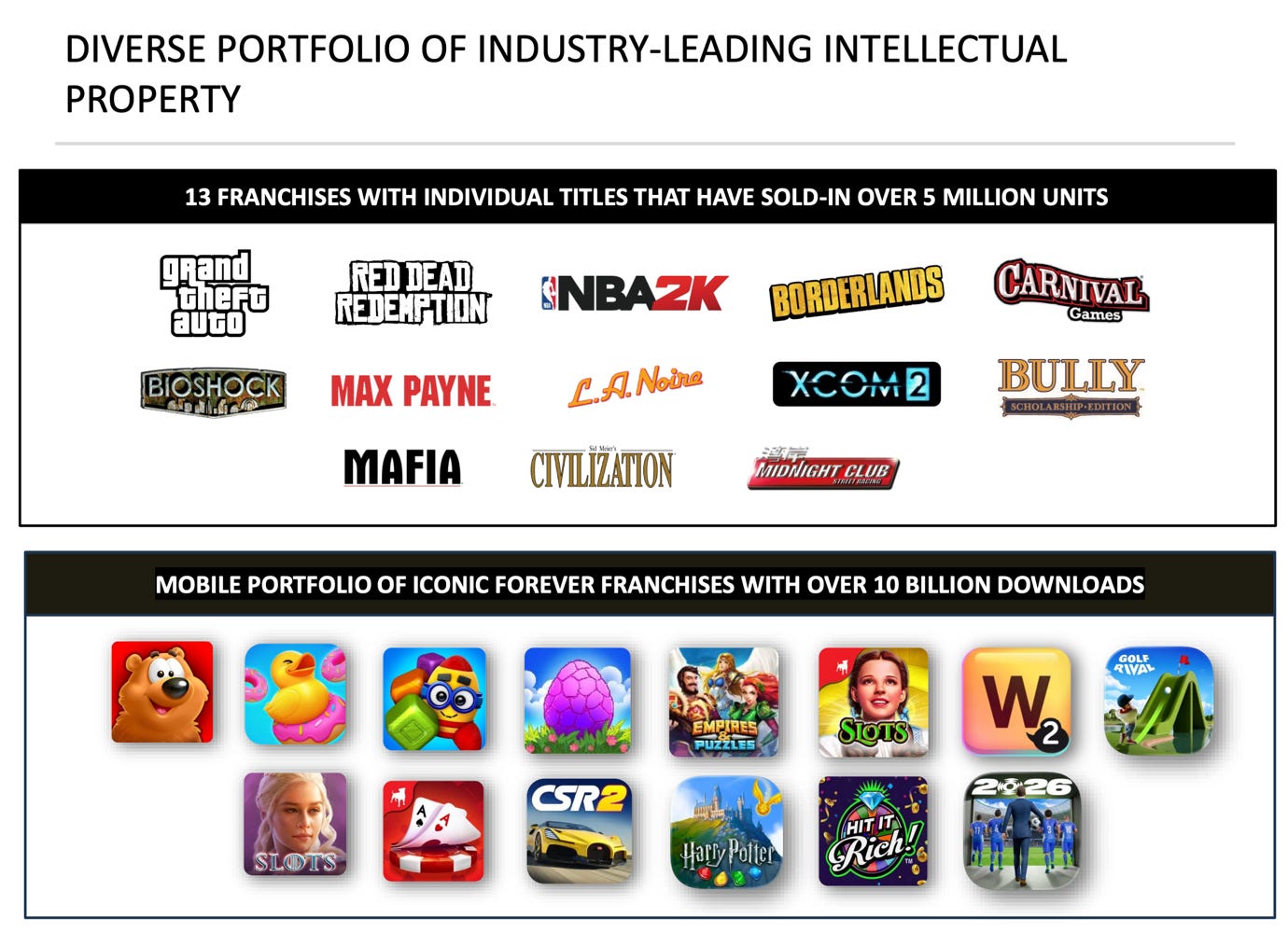
The rest of the portfolio is also highly attractive and has potential for further strong revenue generation.
5. Analyst Estimates
T2 CEO Strauss Zelnick has given out completely sanbagged guidance for 2027. This is clearly done to temper expectations in case of any unforeseen issues.
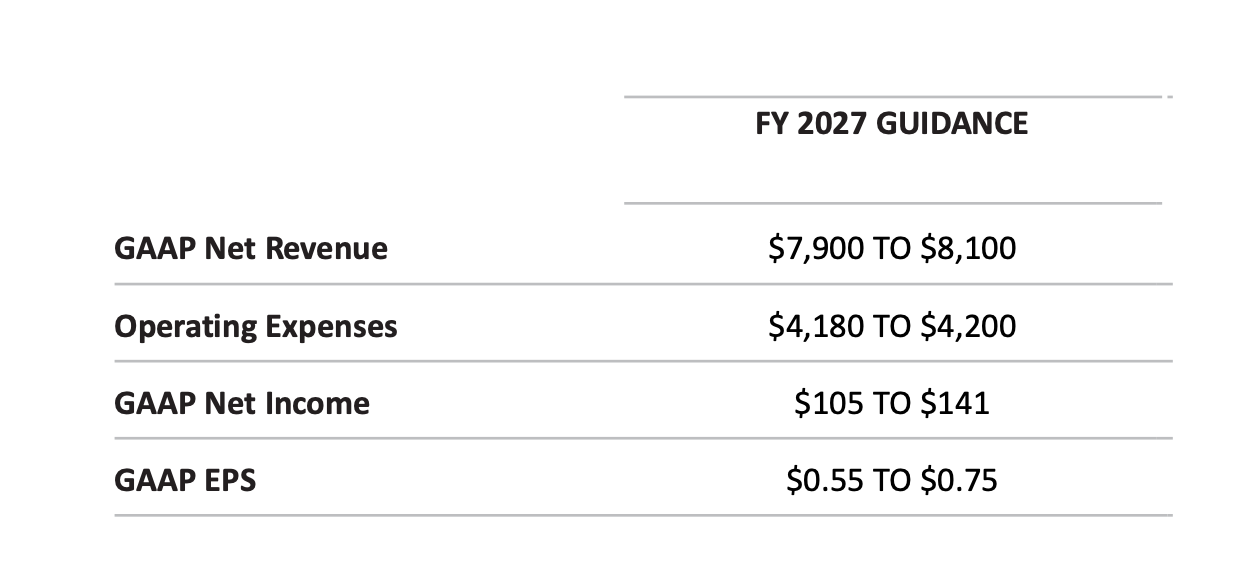
They are guiding for revenues of $7.9-$8.1B in fiscal 2027, implying the company expects only $1.2-1.4B in incremental revenues from the launch of GTA 6.
Granted, there will be some cannibalization, with GTA 6 causing lower revenues for other games during the launch period, but just $1.2-$1.4B in incremental revenues is significantly below my expectations, especially considering the information that the game has already collected $3B in pre-orders.
Even consensus estimates see through this sandbagging.
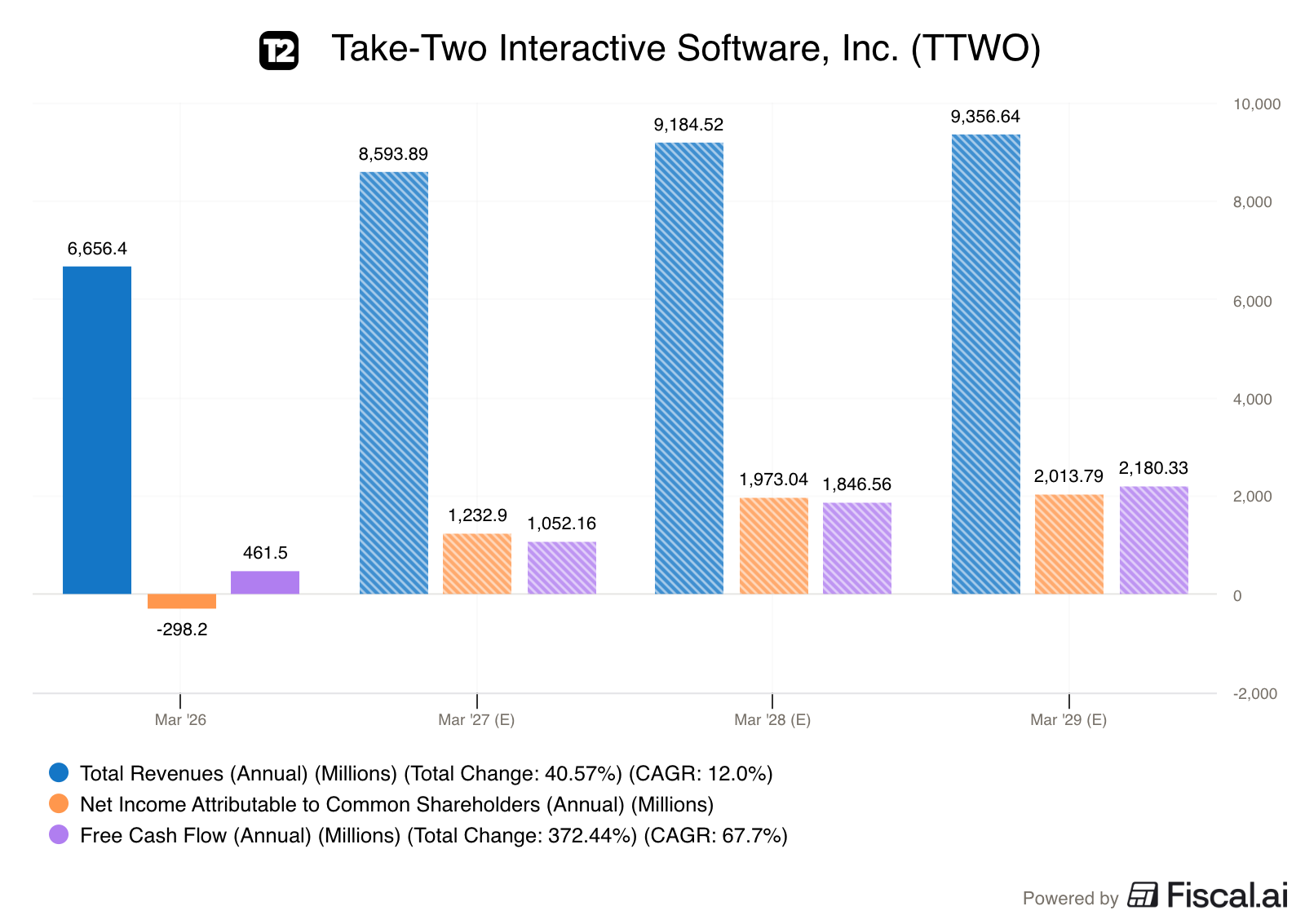
Analysts expect revenues of $8.6B and net income of $1.2B in 2027. While this is $500M above the guidance, it is still too low.
Most importantly, looking out to 2028 and 2029, we notice the real divergence between my opinion and the analysts.
Analysts expect only modest 7% Y/Y revenue growth in 2028 and a minuscule 2% growth in 2029.
For such results to materialize, GTA 6 sales, GTA Online, GTA+, and in-game purchases should underperform my estimates.
At $8 a month, 10M GTA+ subscribers would generate $1B a year in recurring subscription revenues. For comparison, EA Play subscription has about 12-13M subscribers. I don’t see why GTA+ couldn’t significantly exceed that by 2029.
At 20-30M subscribers, GTA+ could potentially generate $2-3B a year.
This would significantly increase margins.
6. Valuation Model
Let’s build a valuation model to see what kind of returns investors in T2 could expect.
Base Case:
Revenue growth of 55% in 2027, 20% in 2028, and 10% in 2029.
26% operating margin in 2029.
20% tax and net of interest.
We get revenues of $13.6B and net income of $2.8B in fiscal 2029.
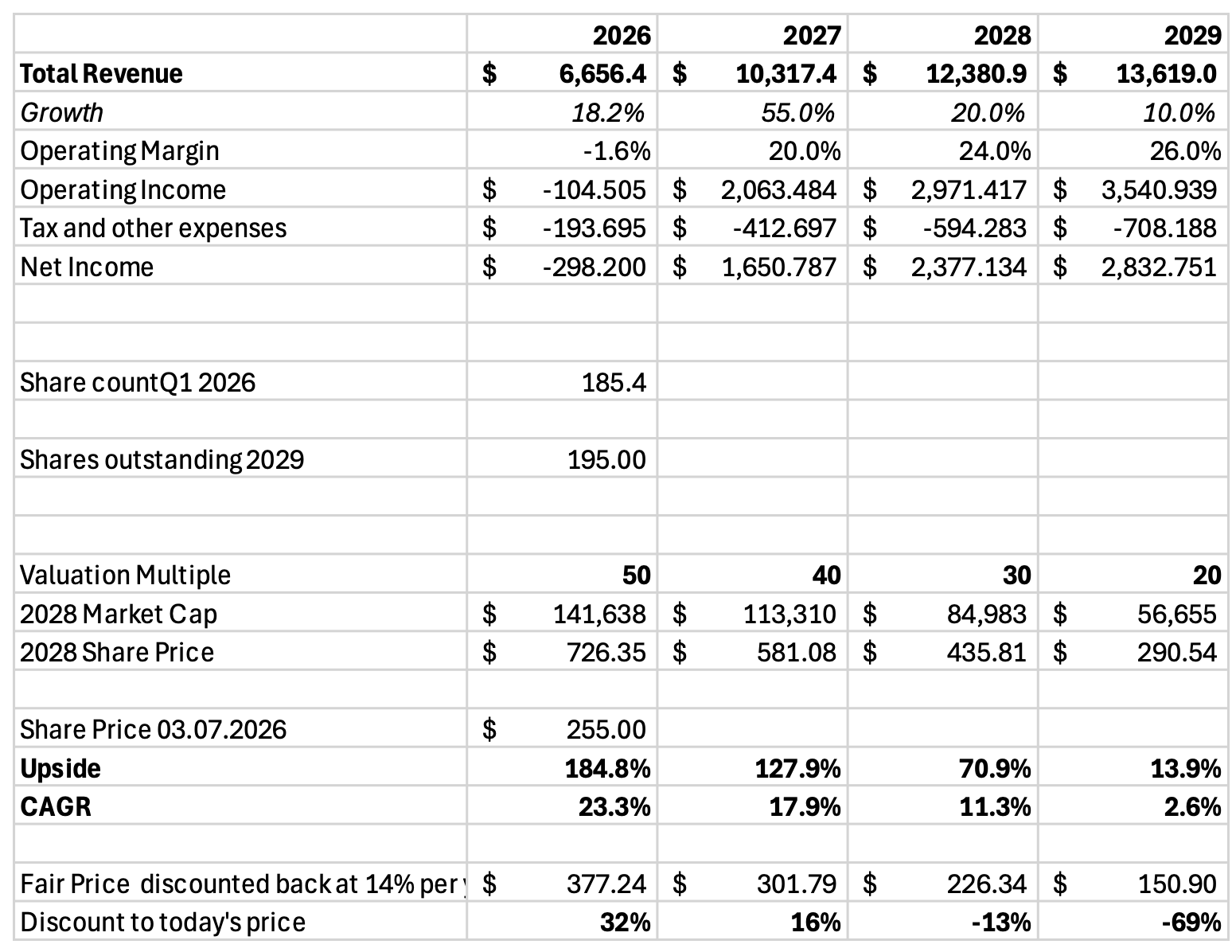
Applying a 40x exit multiple, we get 128% upside.
You can argue about what a fair multiple is, but EA was taken private at 20x FCF, with the company basically not growing for 3 years.
With the quality of the T2 portfolio, durability of their franchises, mobile gaming recovery, GTA 6, GTA+ and GTA Online, the company is in a much better position to grow at a healthy pace for a longer period of time.
In this scenario, GTA 6 generates $3.7B in incremental revenues in 2027 vs $1.2B guidance and $1.7B analyst estimates. This also assumes strong adoption of GTA Online and GTA+, and normal performance of the remaining gaming portfolio.
Mid Case:
Revenue growth of 65% in 2027, 25% in 2028, and 15% in 2029.
28% operating margin in 2029.
20% tax and net of interest.
We get revenues of $15.8B and net income of $3.5B in fiscal 2029.
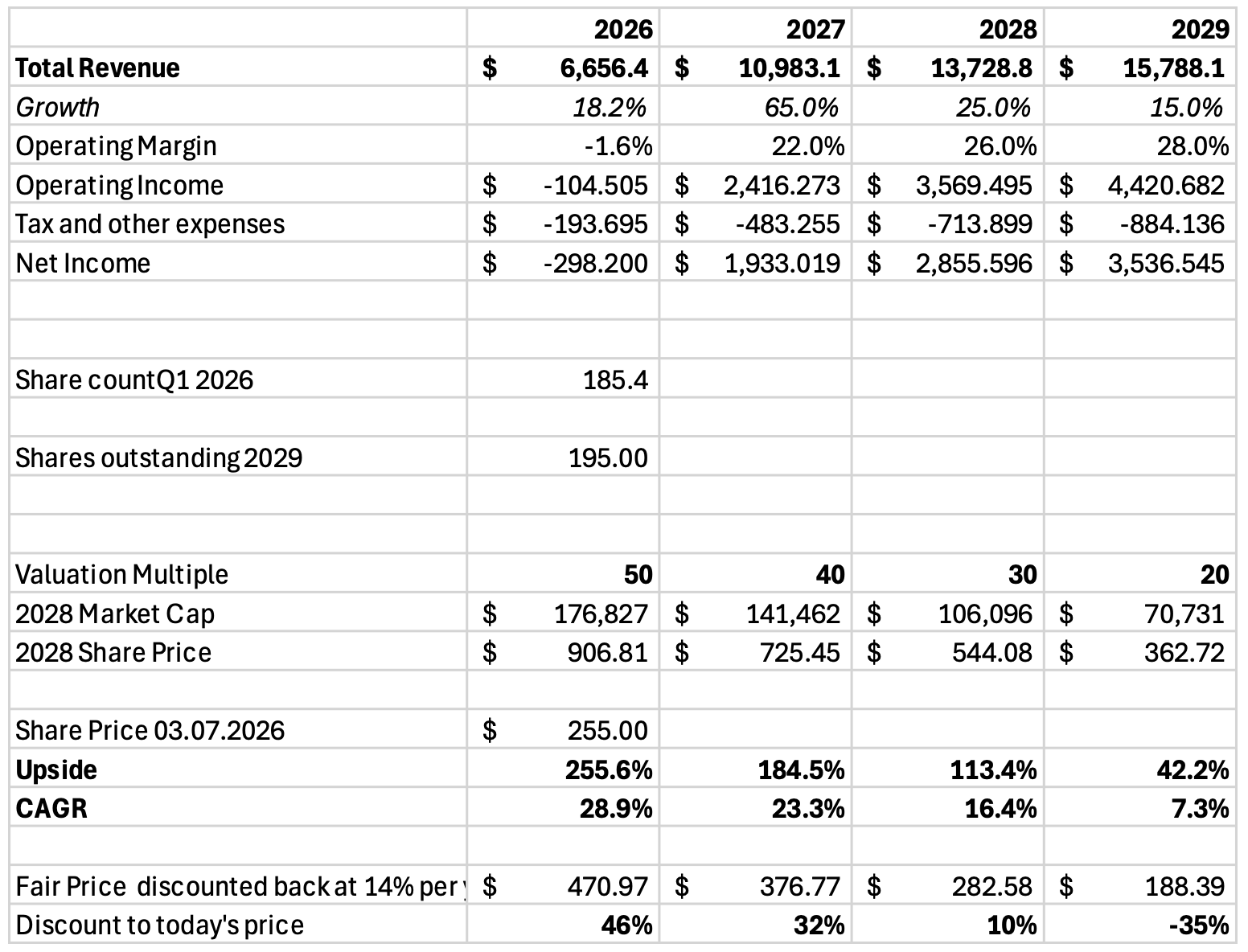
Applying a 40x exit multiple, we get 185% upside.
In this scenario, GTA 6 generates $4.3B in incremental revenues in 2027 vs $1.2B guidance and $1.7B analyst estimates. This also assumes very strong adoption of GTA Online and GTA+, and a good performance of the remaining gaming portfolio.
Bull Case:
Revenue growth of 70% in 2027, 25% in 2028, and 20% in 2029.
30% operating margin in 2029.
20% tax and net of interest.
We get revenues of $17B and net income of $4.1B in fiscal 2029.
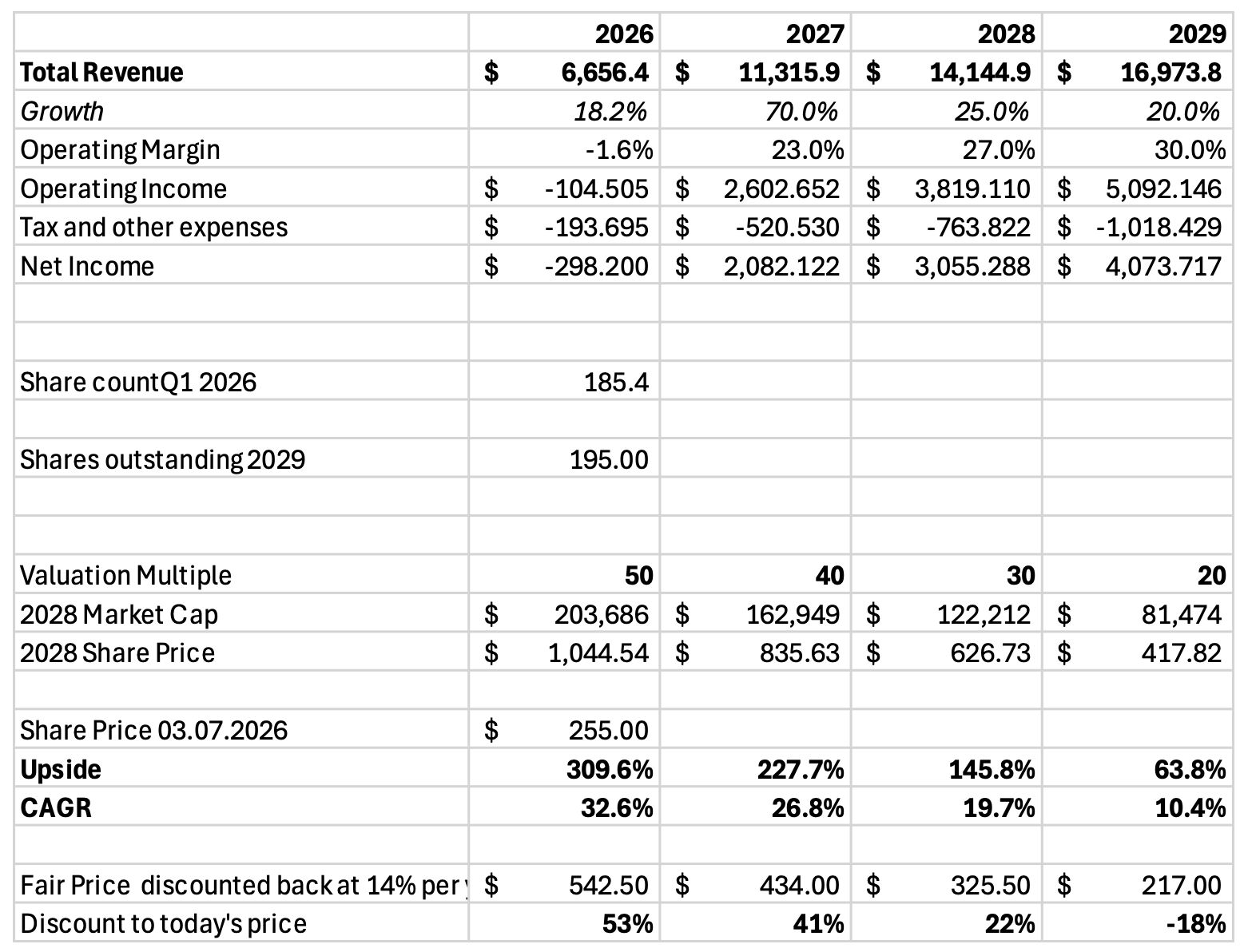
Applying a 40-50x exit multiple, we get 228-310% upside.
In this scenario, GTA 6 generates $4.7B in incremental revenues in 2027 vs $1.2B guidance and $1.7B analyst estimates. This also assumes incredibly strong adoption of GTA Online and GTA+, and a very strong performance of the remaining gaming portfolio.
Overall, I see it as a very realistic possibility for the stock to rise 100-200% in the next 2-3 years.
7. Conclusion
In conclusion, Take Two sits at the cusp of the launch of the biggest entertainment product in human history.
GTA 6 sales volumes will break all records and could very realistically beat Minecraft to become the best-selling game of all time.
Furthermore, with GTA Online, GTA+ and the new in-game purchase wave, Take Two could significantly beat analyst expectations to become a $12B+ revenue company by 2029.
Overall, I see it as a very realistic possibility for the stock to rise 100-200% in the next 2-3 years.
For this reason, I have opened a 3.4% starter position in T2’s German listing @ €222 a share in the Global Equity Portfolio.

Here is what my Premium Members can expect:
Portfolio Review - Each month, I will present the portfolio performance and discuss my stock watchlist and my best ideas.
Recent developments.
Unwarranted pullbacks.
Insider activity.
Potential catalysts.
Deep Dives – 8,000+ word detailed analysis of a company, delivered in 3 Parts.
Part 1 – Brief History of the company and its Business Model.
Part 2 – Management, Moats, Competitors, and Risks.
Part 3 – Opportunities, Financial Analysis, and a Valuation Model.
You can expect a comprehensive research report that is educational, interesting, and provides actionable insights!
To see what you can expect, read my Palantir Deep Dive!
Members of the Premium service get access to my library of 15 Deep Dives and to all future Deep Dives, which will be released on semi-monthly basis.
Investment Cases – A short, concise report with actionable insights.
This report is about the size of a single part of a Deep Dive.
Focused Investment Thesis
Main drivers of the Bull Case
Valuation Model
To see what you can expect, read my Oscar Health Investment Case!
Earnings Reviews and Updates – For companies that are of great interest to me and my readers, I will provide regular quarterly or semi-annual updates after earnings reports.
Financial performance
Business Update
New developments
Updated Valuation Model
To see what you can expect, read my Google Q2 2025 Earnings Review!
You can follow me on Social Media below:
X(Twitter): TheRayMyers
YouTube: TheRayMyers
Threads: @global_equity_briefing
LinkedIn: TheRayMyers
Equity Research Report List
Disclaimer: Global Equity Briefing by Ray Myers
The information provided in the “Global Equity Briefing” newsletter is for informational purposes only and does not constitute financial advice, investment recommendations, or an offer or solicitation to buy or sell any securities. Ray Myers, as the author, is not a registered financial advisor, and readers should consult with their own financial advisors before making any investment decisions.
The content presented in this newsletter is based on publicly available information and sources believed to be reliable. However, Ray Myers does not guarantee the accuracy, completeness, or timeliness of the information provided. The author assumes no responsibility or liability for any errors or omissions in the content or for any actions taken in reliance on the information presented.
Readers should be aware that investing involves risks, and past performance is not indicative of future results. The author may or may not hold positions in the companies mentioned in the “Global Equity Briefing” report. Any investment decisions made based on the information in this newsletter are at the sole discretion of the reader, and they assume full responsibility for their own investment activities.
I'm all in on TTWO. This report only reinforces my conviction in the company. I truly believe management is executing well, and I'm very optimistic about the long-term potential. Especially with the upcoming release. Thanks for putting together such a thorough analysis. Looking forward to your next report!